

TRANSCENDENTAL EXPRESSIONISM
-
Intention is an essential tool for exploring a more emotional process. When I begin a work without inspiration or intention, it shifts the objective towards a more expressive outcome. Fully abandoning intention actually brings greater reflexive cohesion to the seemingly incongruent thoughts and feelings of the experience.
This is the series that did not begin as a series. Most of these drawings were conceived in moments of heightened cognitive and/or emotional states—allowing myself full freedom to let them unfold naturally. Most of these I drew in the dead of a very grey winter as a way to escape my current surroundings—they are full of color and vibrancy.
“Summer House” is a favorite of mine. It began with the eye in the center of the house. I was attempting to replicate the eye of a woman I knew, as I remembered a time when I was not feeling isolated. I lowered the opacity of the drawing tool to create a more transient atmosphere—giving the place a sense of being on the verge of dissolving at any moment. If you look closely, you will see a goat on the left side of the roof of the house and a monkey on the right—a city skyline expanding between them. The house masks the identity of the true person or place, fixated on your arrival, ignoring the rest of the scene: a woman diving past the chaos into the seaweed, a pregnant woman sinking as she holds her breath at the bottom of the lake—waiting for a wedding dress to sink onto her outstretched body. The man in the center is moving into position to kick his right flipper into your face, while the girl in the snorkel mask watches you. A scene meant to make the viewer feel enamored by the absurdity—too curious to leave.
I abandoned “Tangerine” to work on “Night” for a very long time. Night was one of the works that blossomed from a crayon drawing, making it feel more tangible to bring to life, but “Tangerine” has become a quiet favorite. It was one of the last drawings I finished in this ever-growing series. It began as a series of struggling lines in the bottom right corner. The colors I used guided me into the image, which developed into two pigs frolicking in front of Teddy Bear Sunflowers. I named it Tanergine because I wanted the viewer to think of tangerine skin when looking at the pigs. I loved the hatching on their bodies and did not want to detail their skin. Whether I was successful in forcing the connection remains in the viewer's hands; however, I love that this work portrays the exuberance of two tusky hogs—a true testament to my beloved Alma Mater, The University of Arkansas.
I have already stated that “Night” began from a crayon drawing of an abstract seaside scene. I was thinking of Milton Avery and my time spent at several coastlines. As I developed the foliage on the land, I wanted animal forms to form focal points because everything was floating. And this was the birth of Alien Goat and Animorph. I loved the two primitive forms so much that I gave them a small house—this persuades the imagination that these two creatures are cared for and loved within this overwhelming expanse of life. The large greyed-out circular forms can be viewed as clouds in a night sky or as boulders emerging from a coastline. Above the left roofline, a portal emerges to urge the viewer to dive further into where this scene could take you.
I began “Island Stain” similarly to the other works by carrying colors across the page. As it developed, it reminded me of a day I had on an island. I drew in the white flag to trigger my memory to seek peace past the confusion that chaos brings.
“Dante,” previously titled “Gape to Threaten,” arose from the dark undertones effortlessly. Here we have Dante the dog, in his superhero cape, impervious to the chaos and terror surrounding him. To his left stands a witch with a gaping mouth, attempting to overpower the atmosphere with ghoulish mind-games, while two large, monstrous hands climb into the scene, laced with skulls and fire. And still Dante stands strong, tongue lulled in boredom.
“Dreamland” is full of imagery, attempting interplay. Part of me thinks it might be about 9/11 and how it feels to remember the day of the attack while still attempting to live life the same way it was before it was stolen from you. The scene depicts a truck cab avoiding a falling water tower—elements of New York vibrancy (a bunny and Giant Diamond) riding into the destruction.
“Chat” is my most underdeveloped drawing. I am extremely influenced by the DaDa movement and how it speaks to the absurdity of war. This is how it felt to attempt normalcy after witnessing footage from 9/11 and experiencing the interplay of life again. The spillage of words that never reach the other person’s ears fall onto the tabletop like spilled milk. And even there, they do not mix well. The hatched markings over the figure on the right’s face—a static cloud hindering the two from making eye contact. All while the figure in the foreground questions why they are even talking.
I wonder what the depths of the sea were doing that day?
“Seatrophy” is meant to bring attention to how destruction and war often cue us into the fantastical in our desire to escape. A small creature with an agast eye attempts to direct the attention of a god-like sea creature whose dragon head is merely disguising a curious creature that is watching a foreign sparkle before the other can scare it away. A giant scavenger bird is overlooking the scene from above. The title is an interplay in words. Are we talking about the sparkle being a sea trophy or are we discussing the effect of a day, se atropy? Se- being a Latin prefix meaning ‘without.’
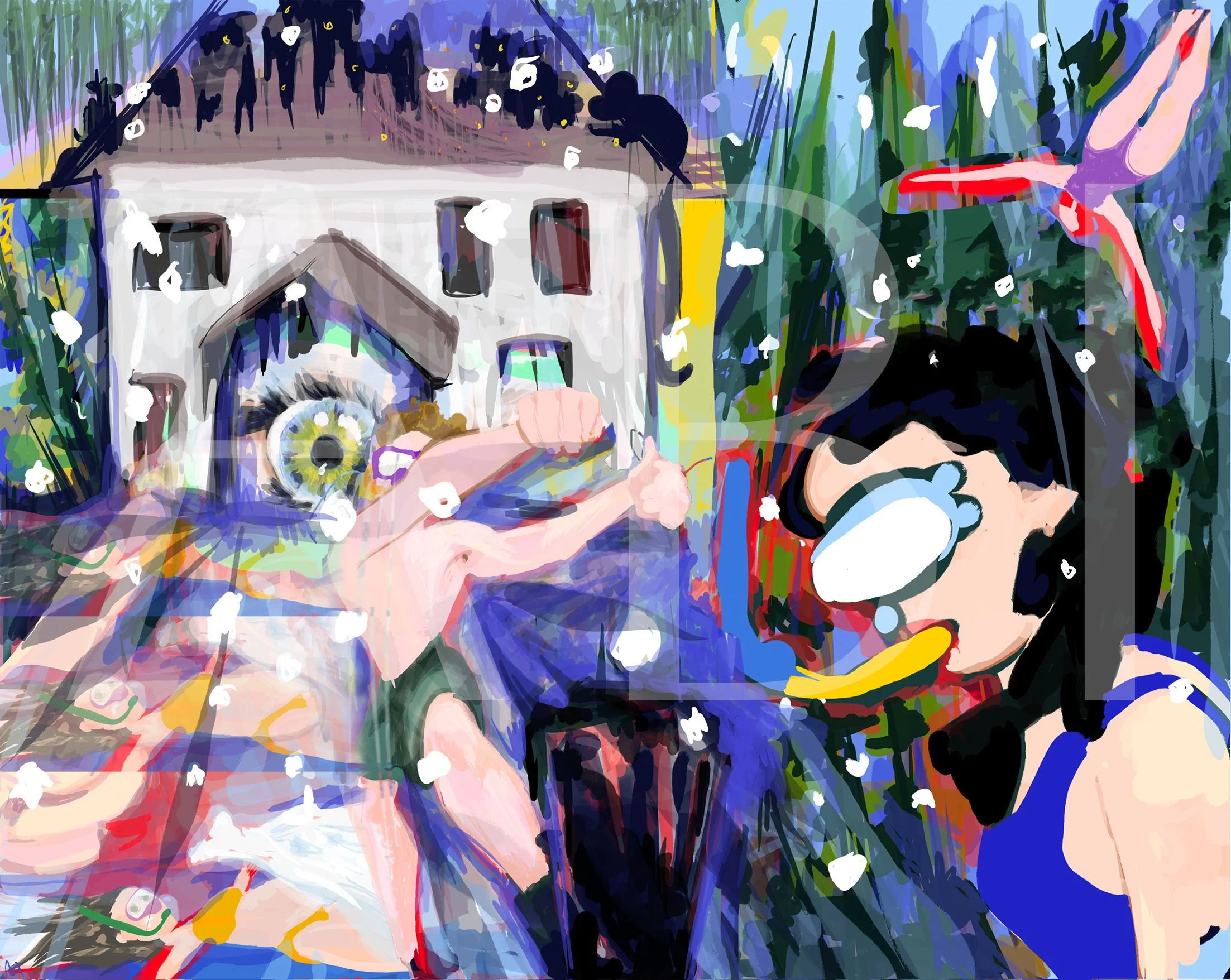
“Summer House”
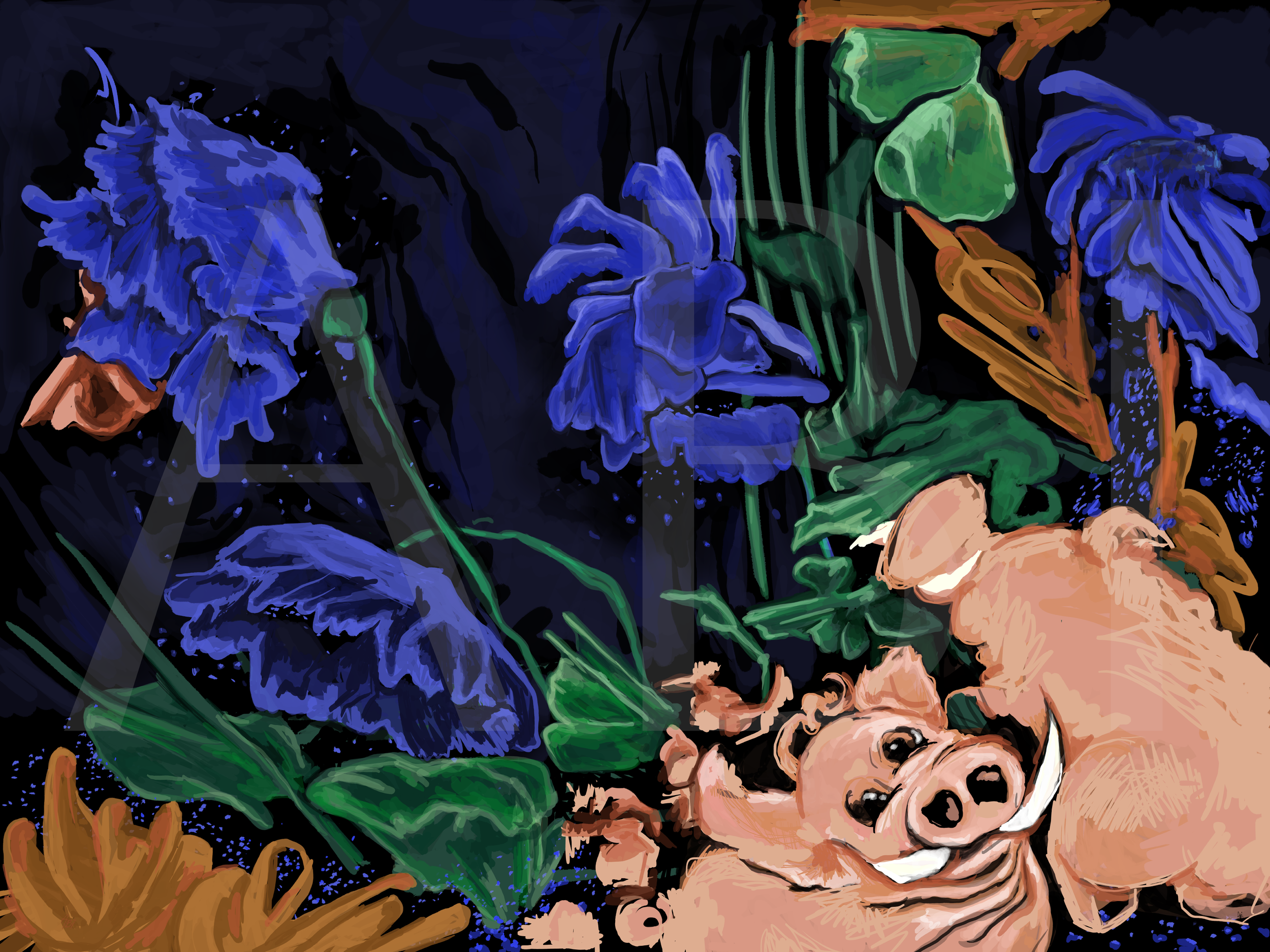
“Tangerine”
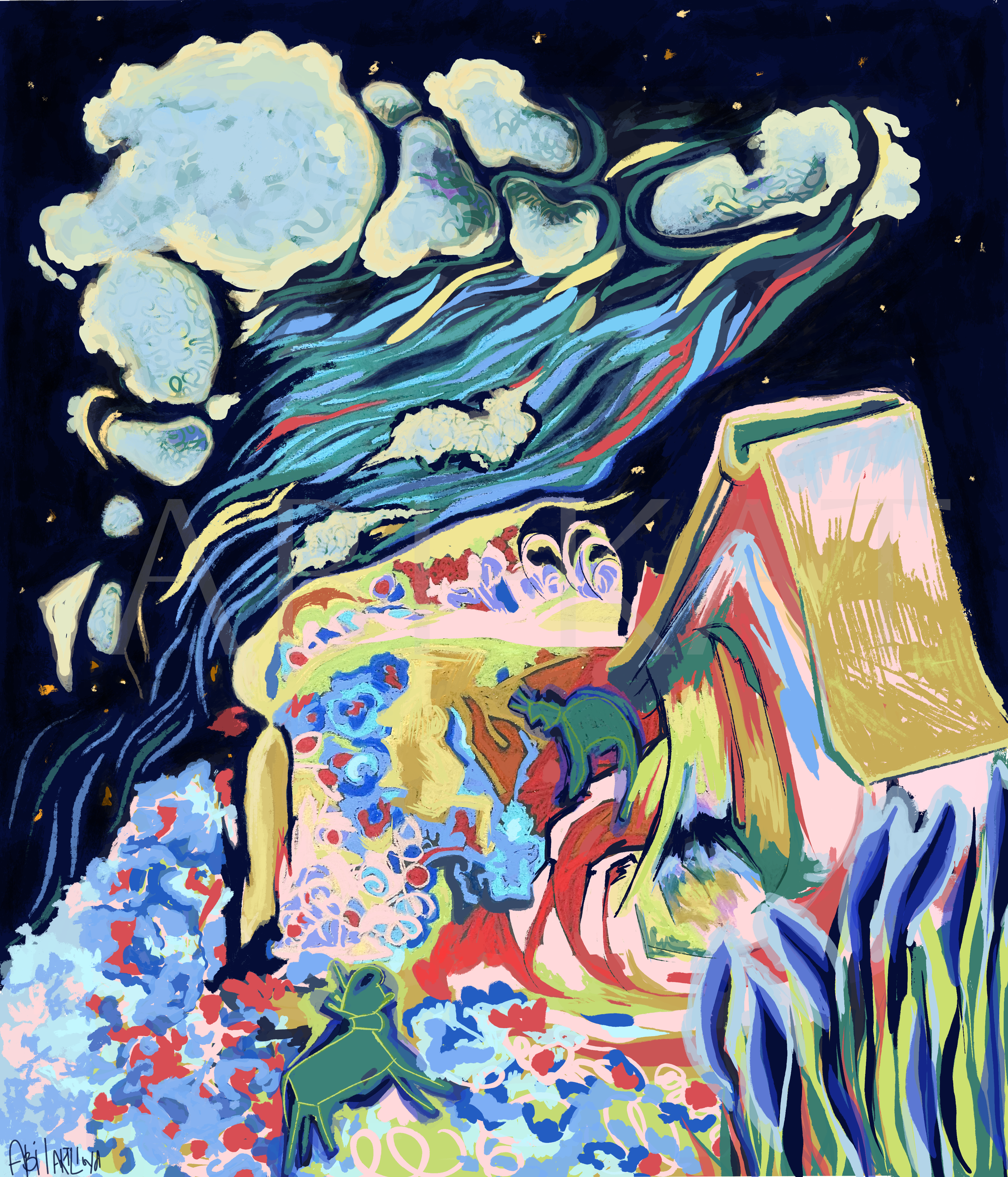
“Night”
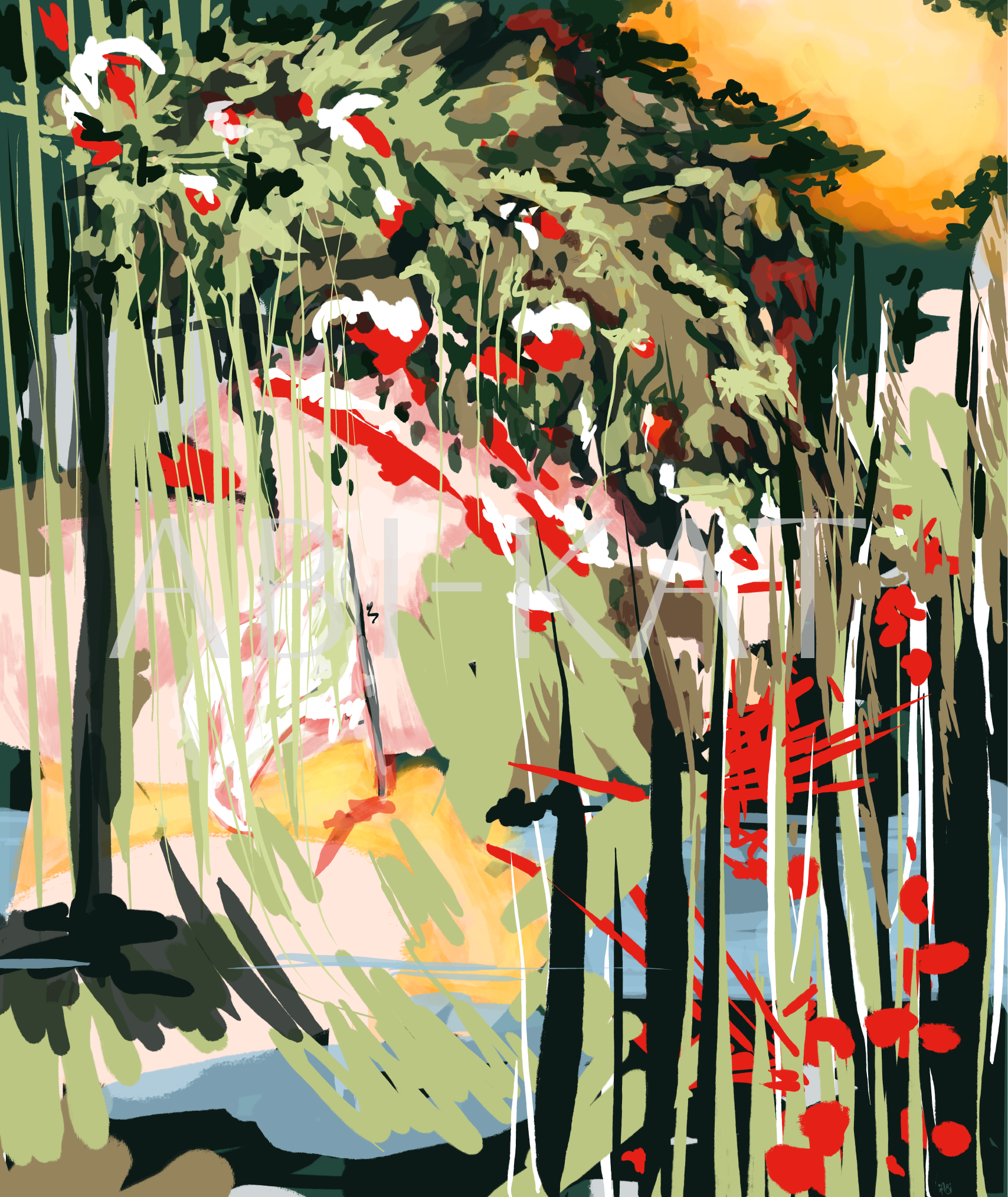
“Island Stain”
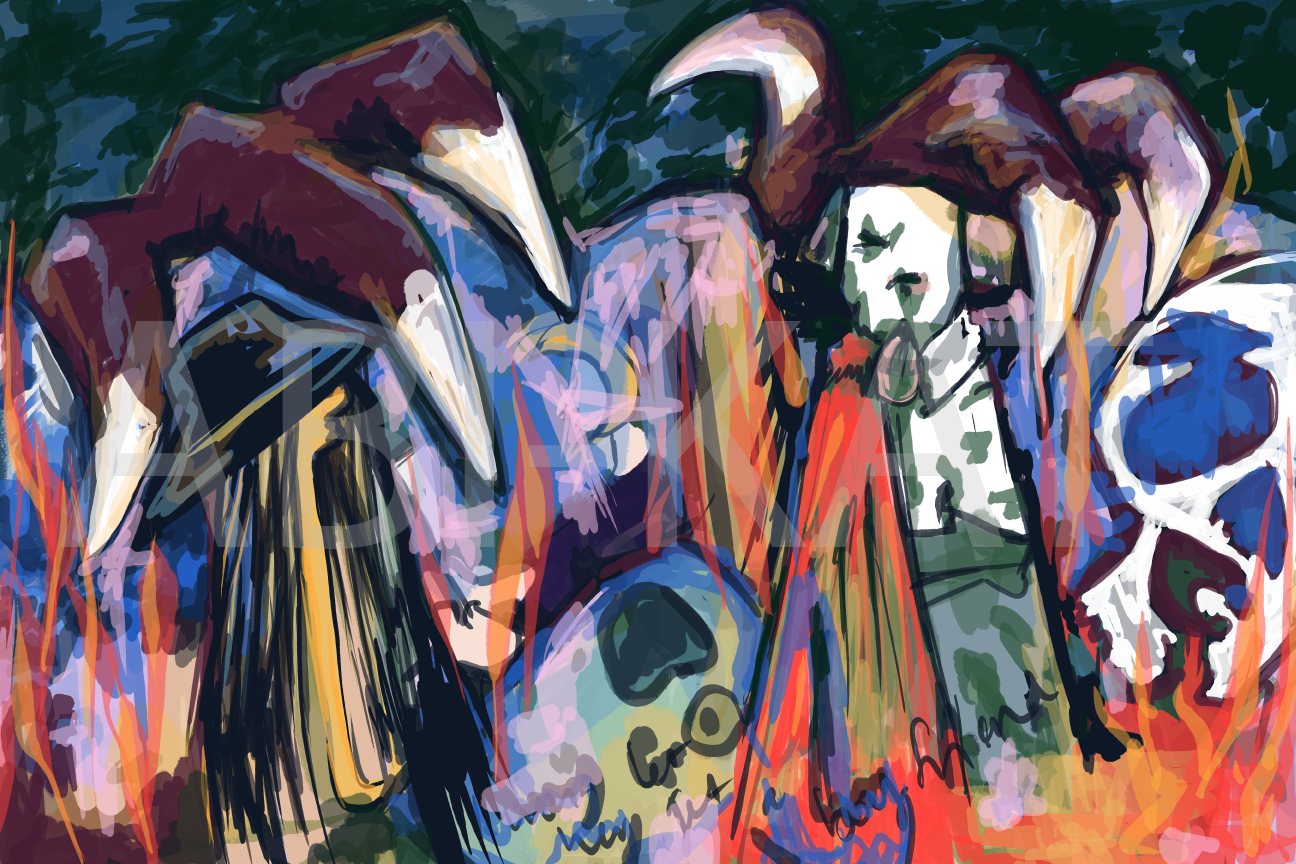
"Dante"
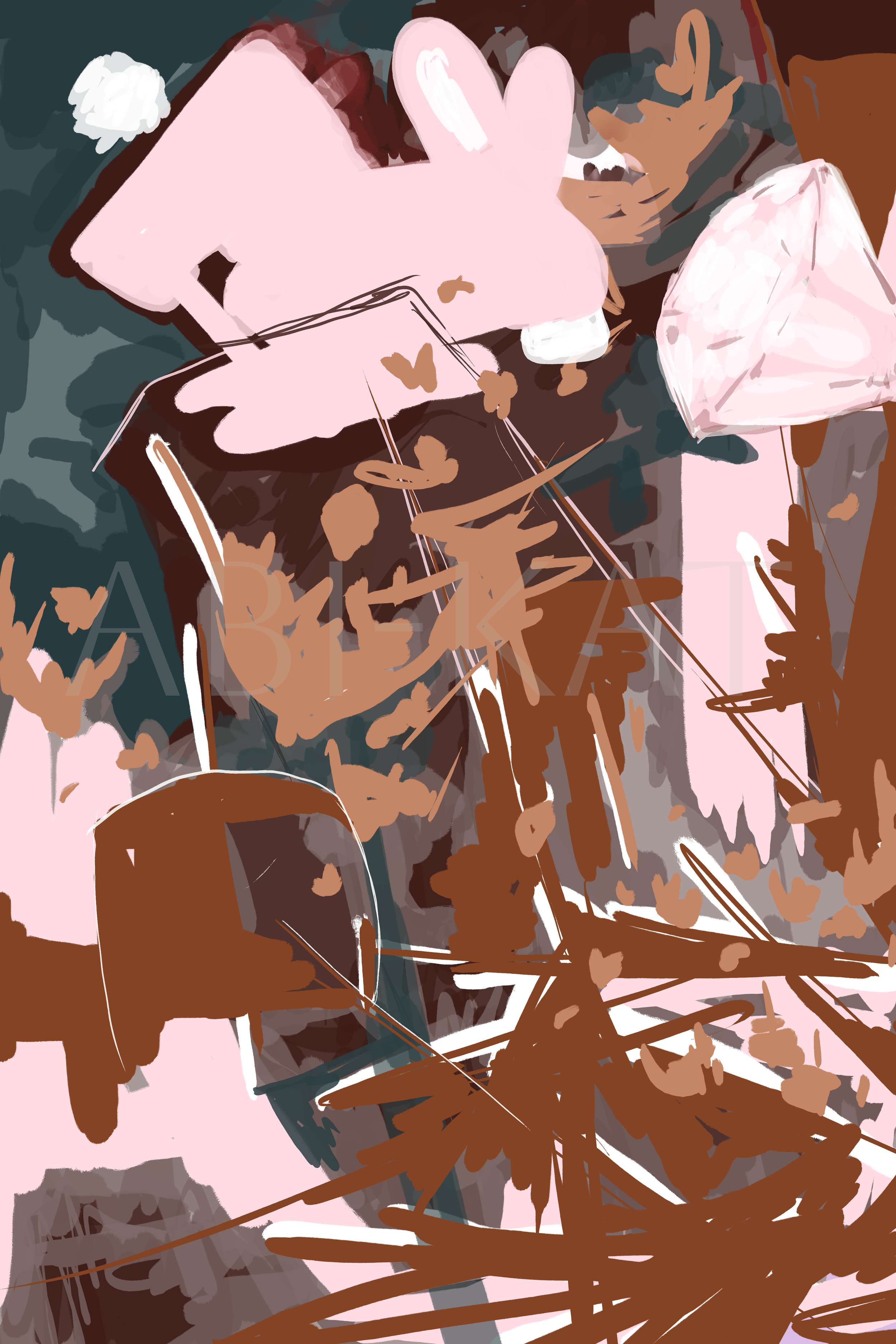
“Dreamland”
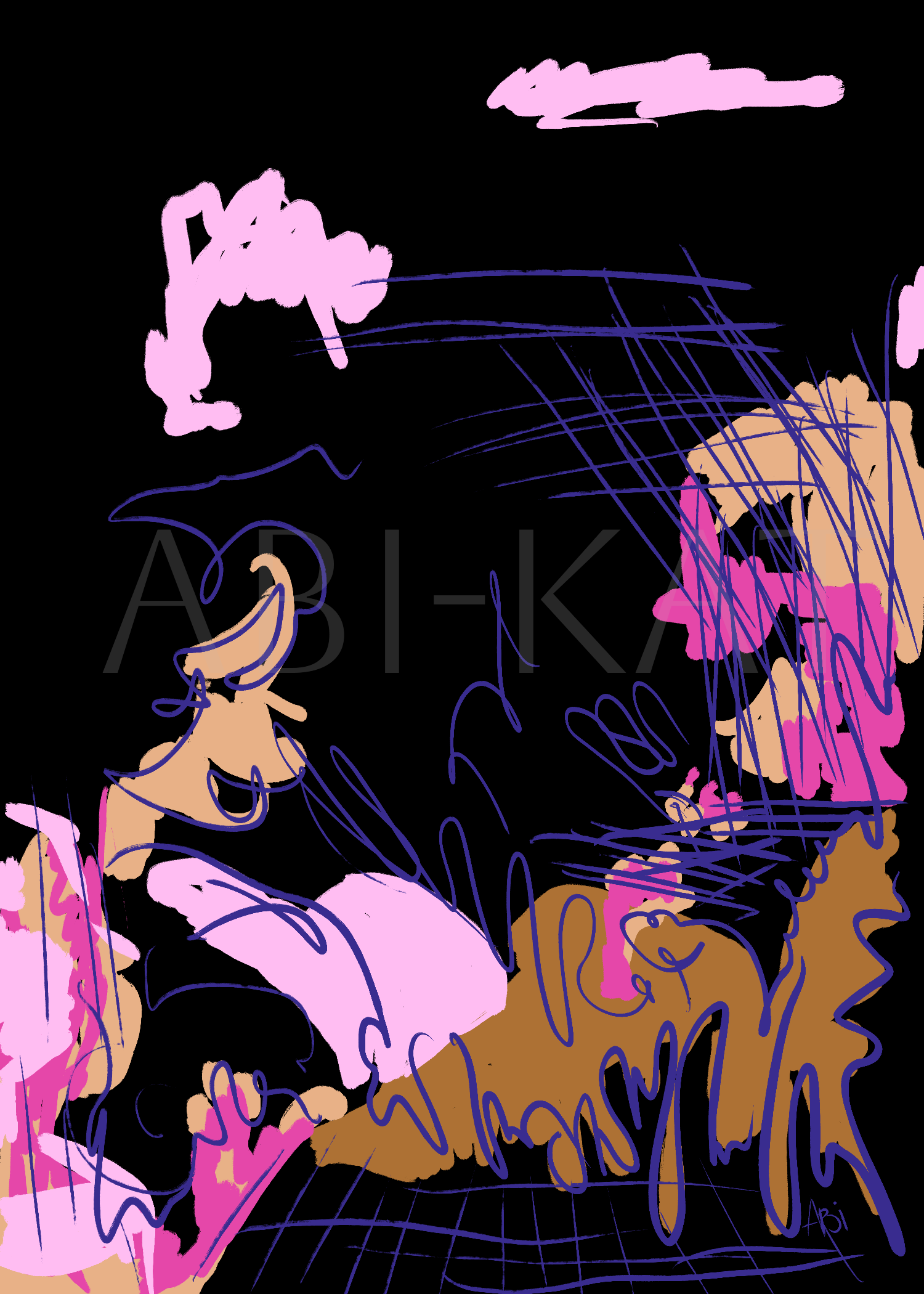
“Chat”
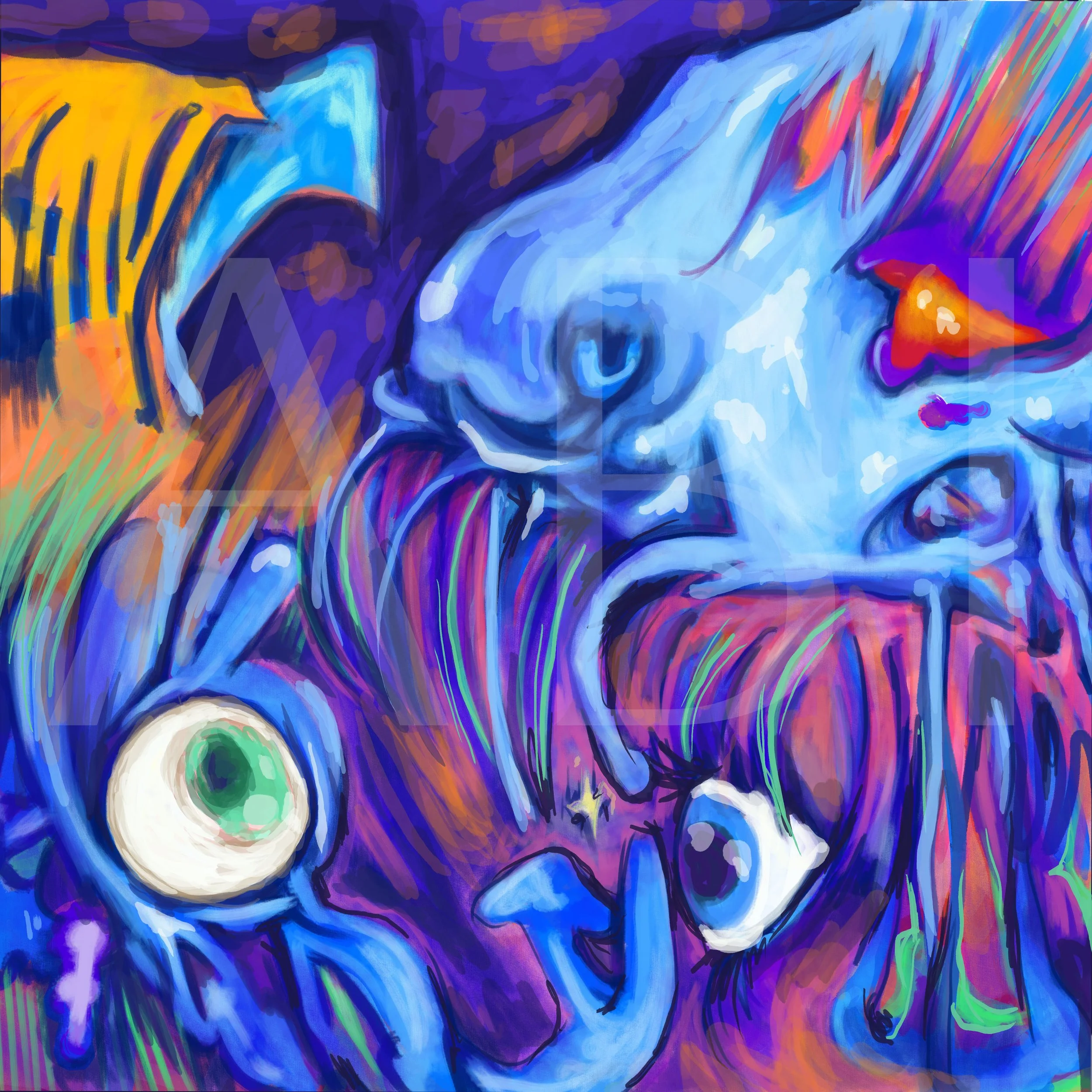
“Seatrophy”
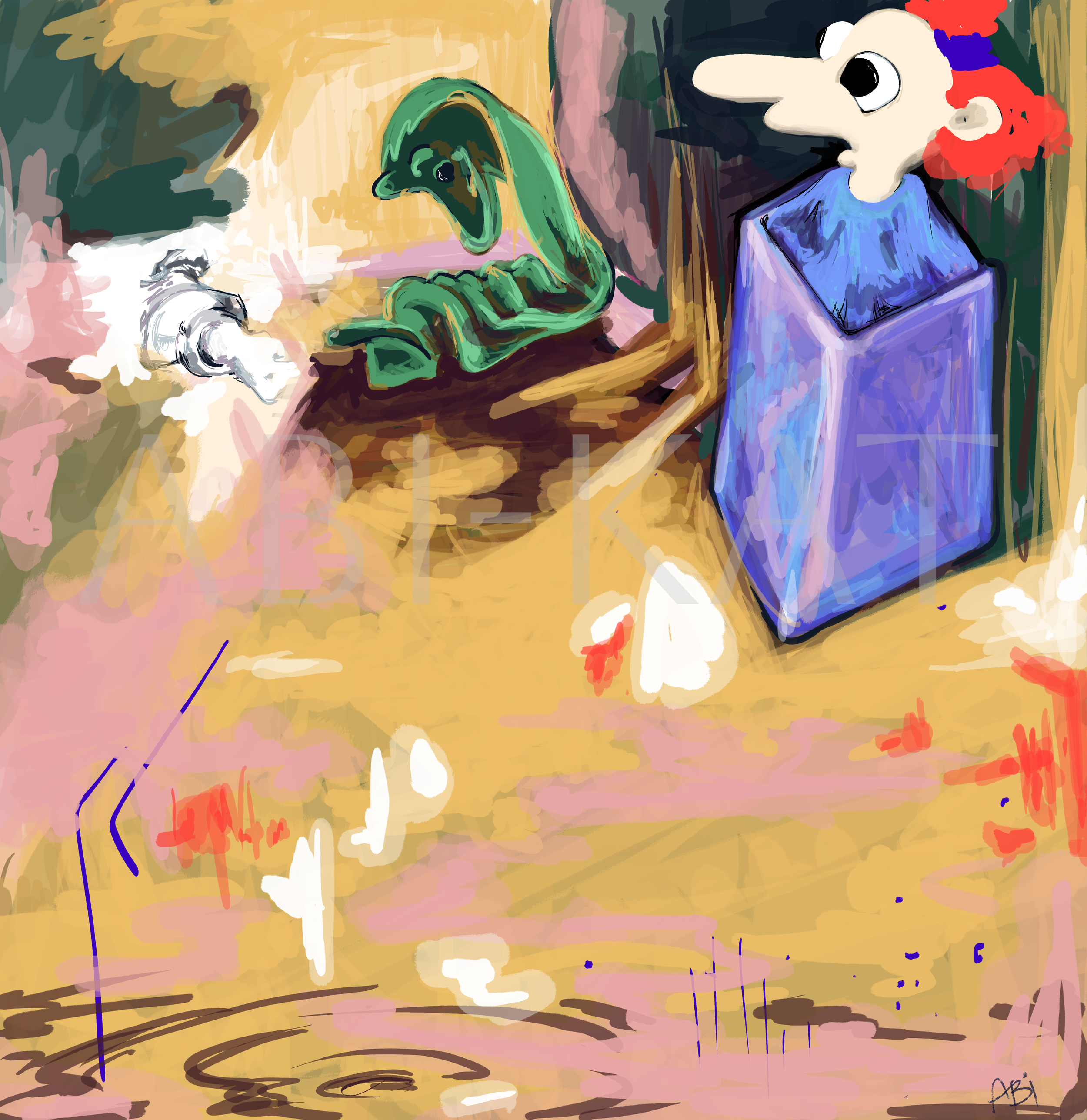
“Kundalini”
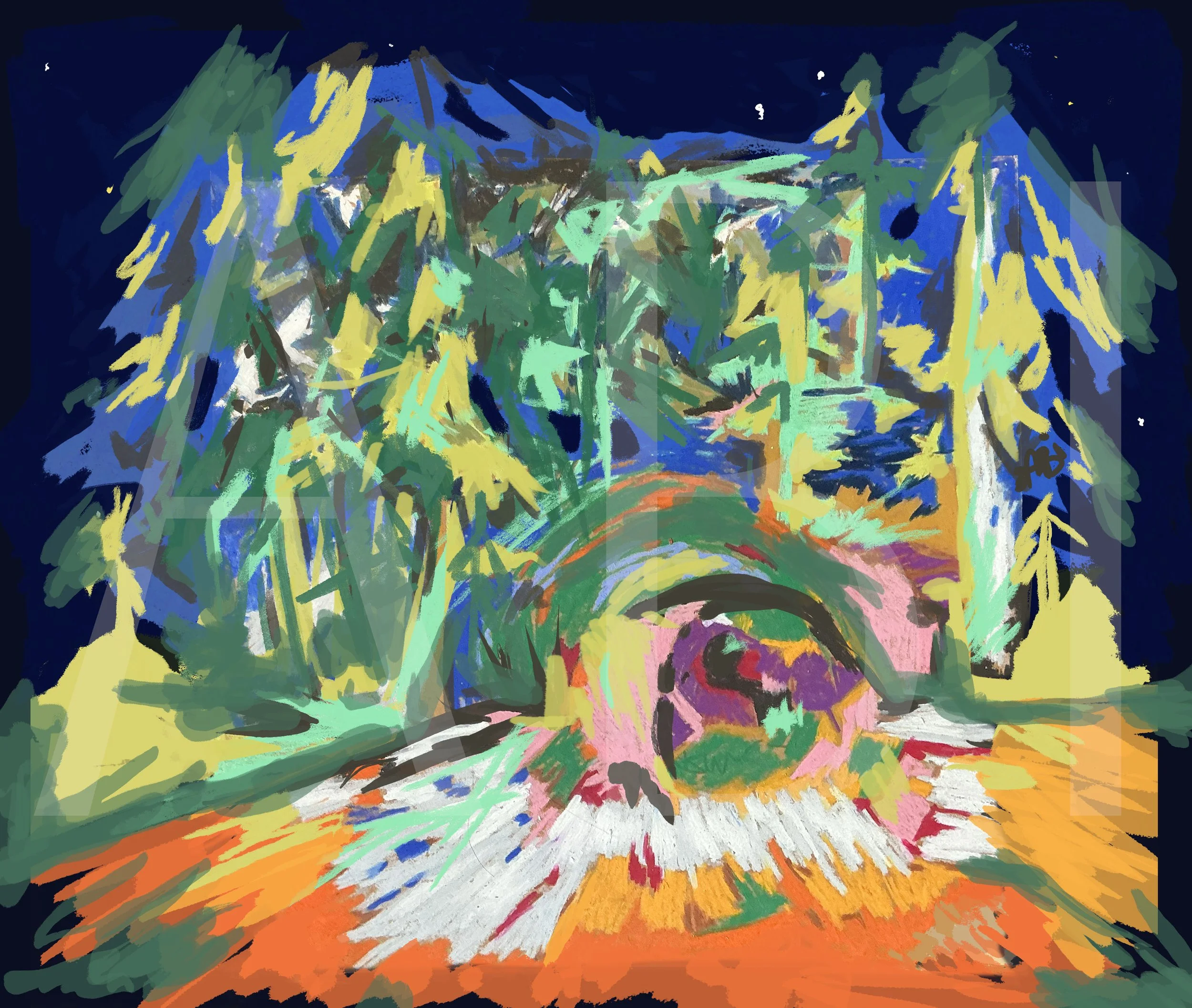
“Seek”
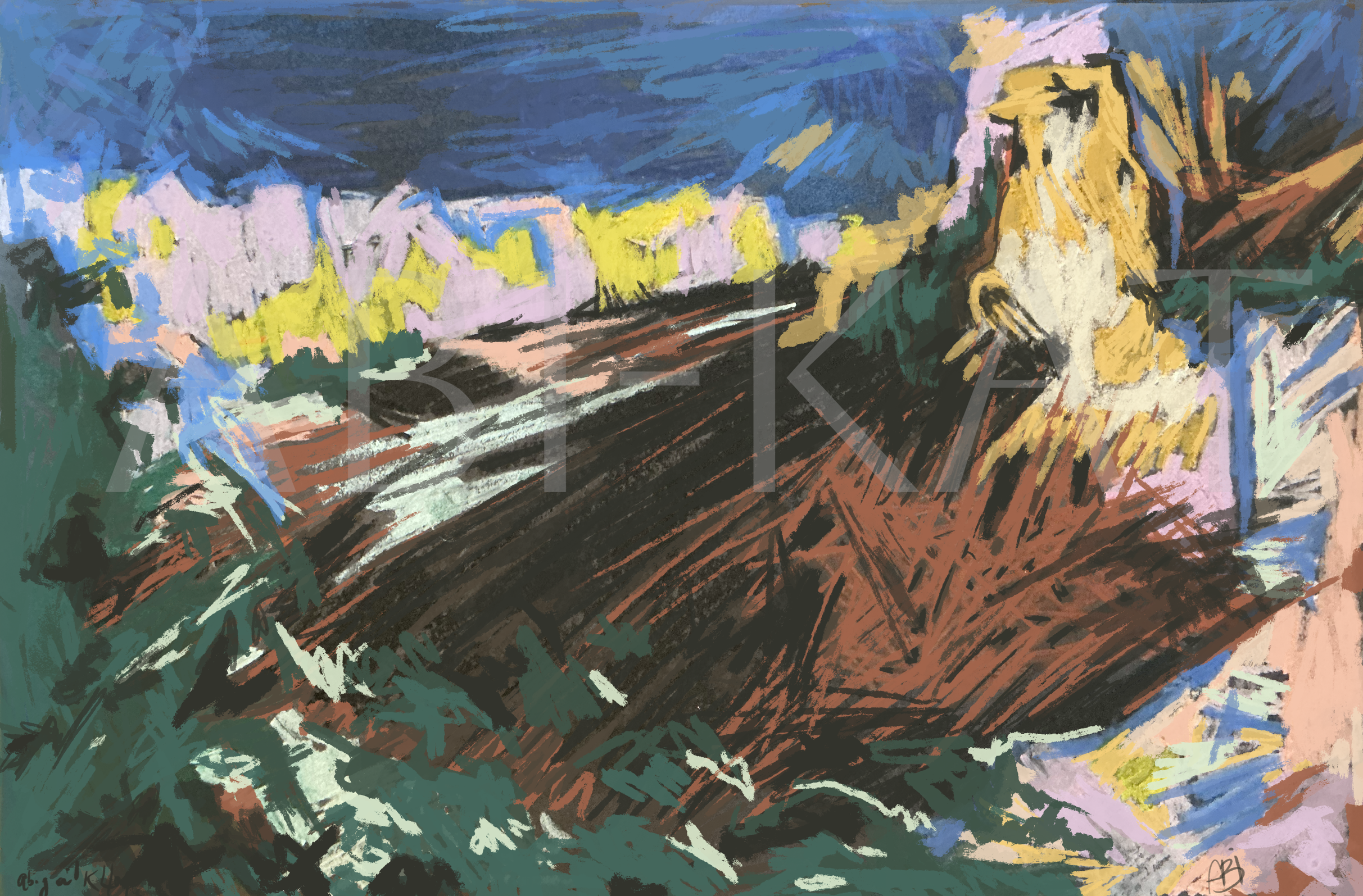
“Sedona”
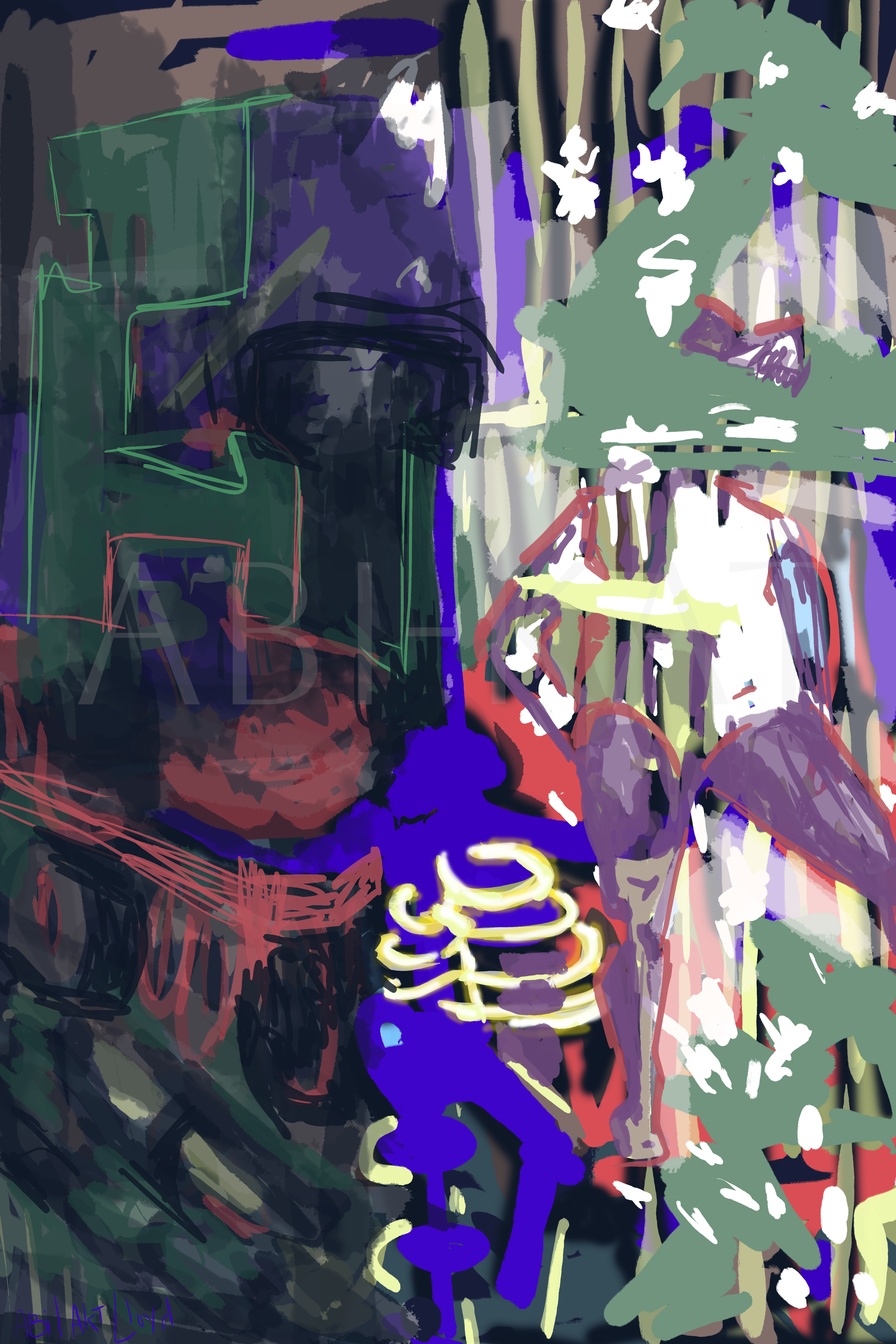
“Anglican”
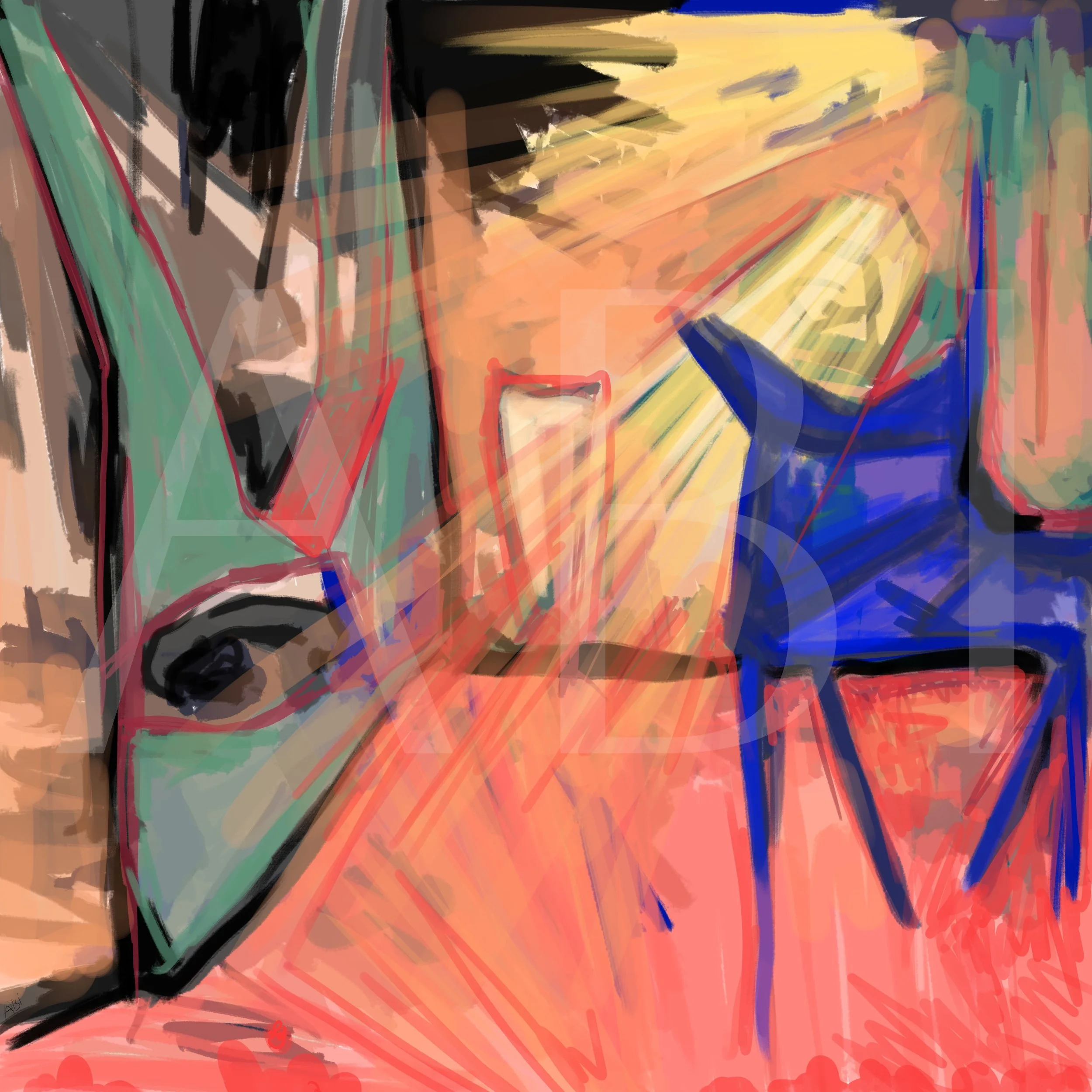
“Empty”
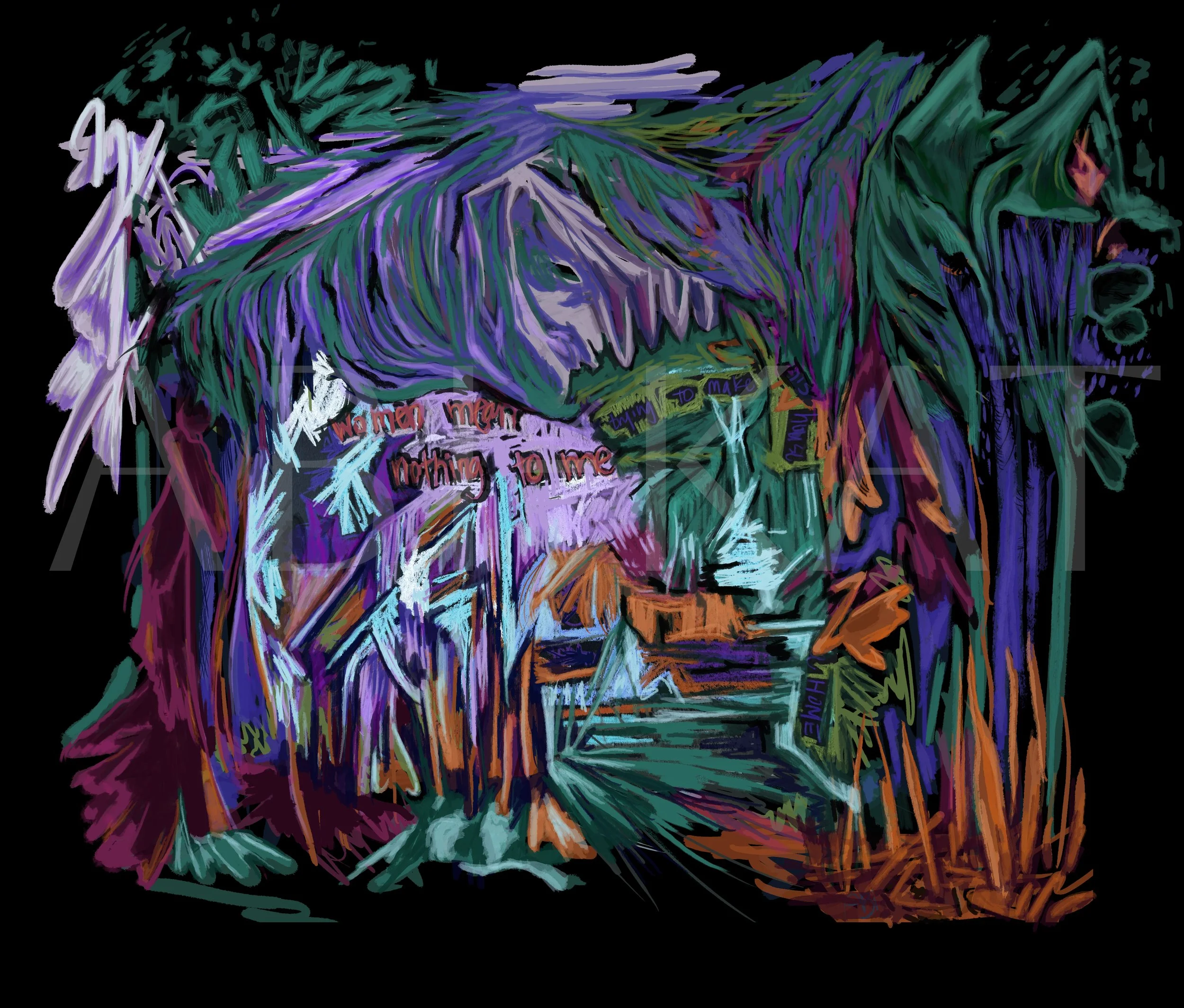
“Latin”
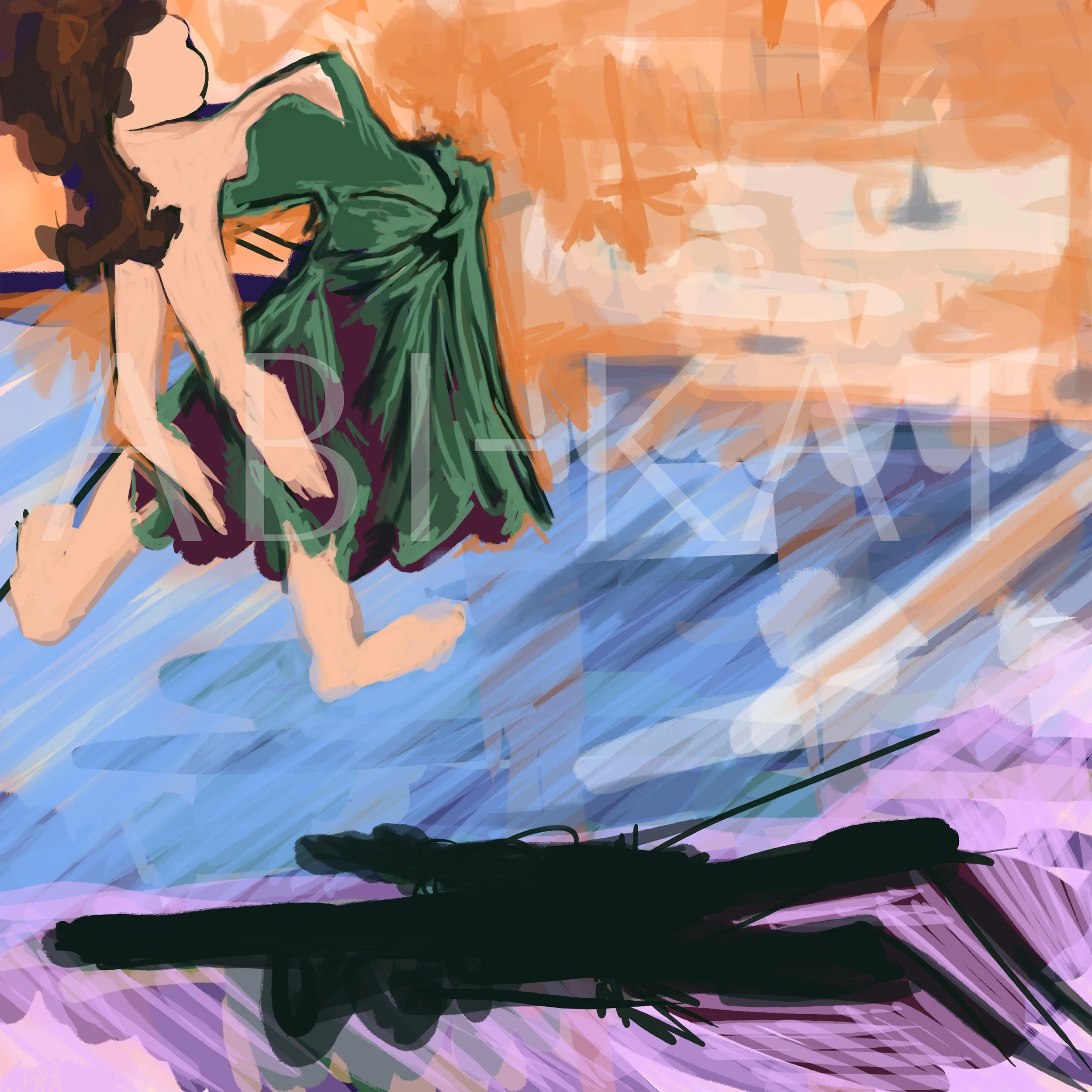
“Limbo”
Botanicals
-
A series to explore the symbolic connection we give to botanicals.
“Willow” gave birth to this series. I was enjoying how drawing these leaves felt on my iPad, but as I began to give them color they started to look more like rib bones. This prompted me to draw the stems as vertebrae. At first I thought it looked slightly gruesome, like skinned people on display. However, plants had become part of a large metaphor to express how I feel to people close to me, as I often struggle to make sense of things. Perhaps these are exactly the way I felt emotionally, physically, and spiritually but rendered down for something slightly more pleasant for consuming.
“Oracle”began as attempts to draw the hollyhock I planted at the house I cared for tentatively for years before my separation. I planted something that I would not be able to enjoy in full growth. As the thought began to settle, I started turning the petals into bone like structures and carved an esophagus into the base of the plant. The title, “Oracle” was given to this work to force the connection that truth invades reality whether we speak about things or not.
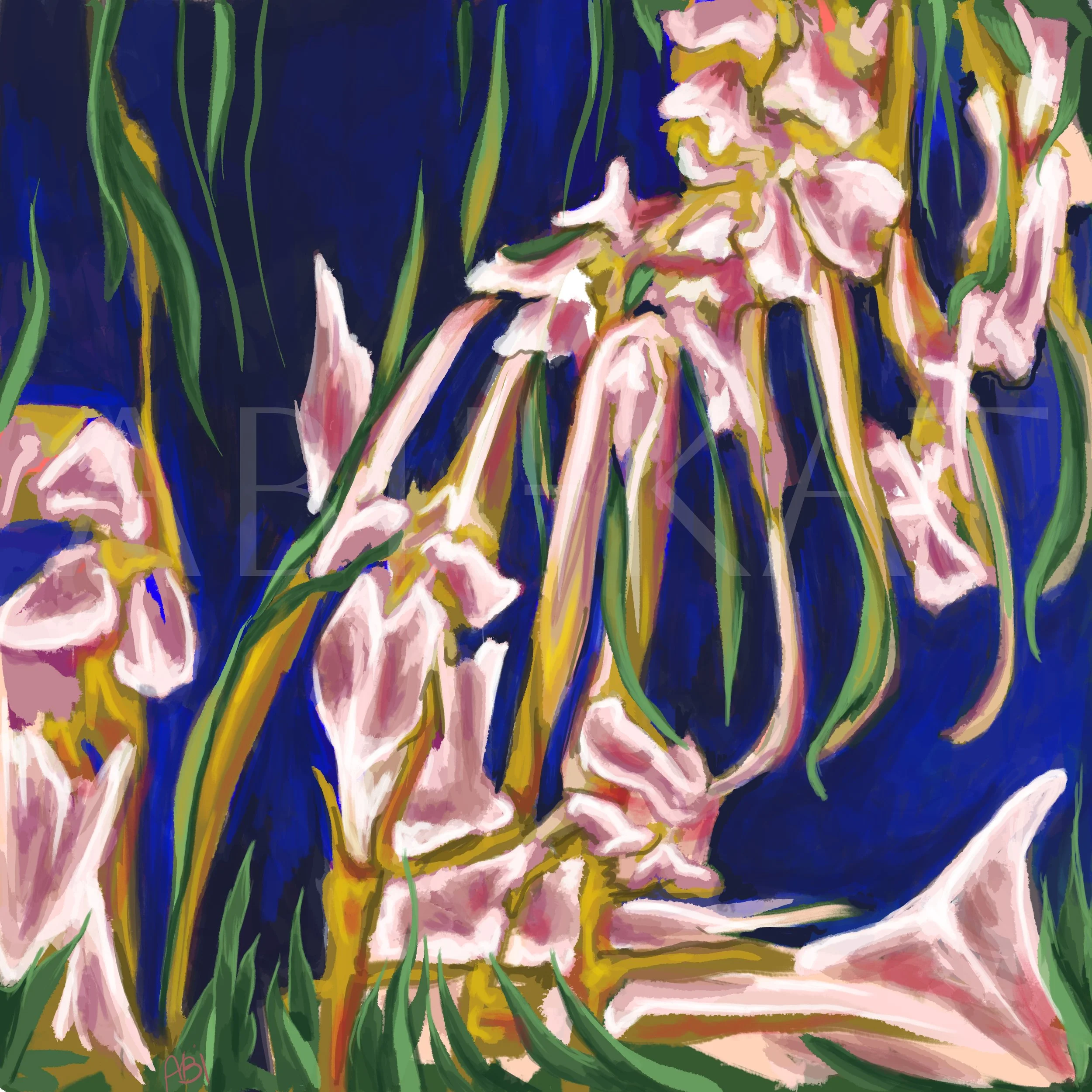
“Willow”
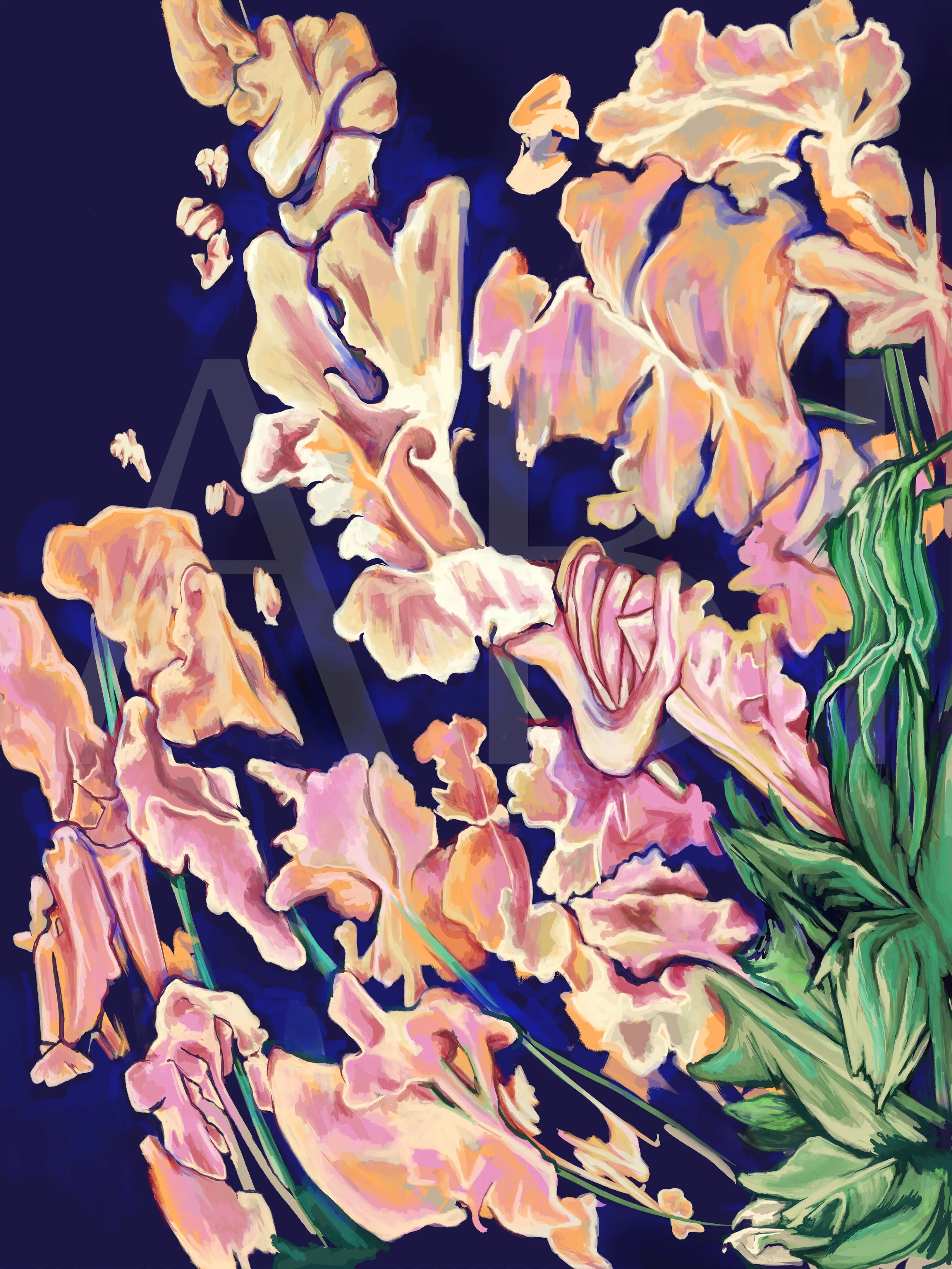
“Oracle”
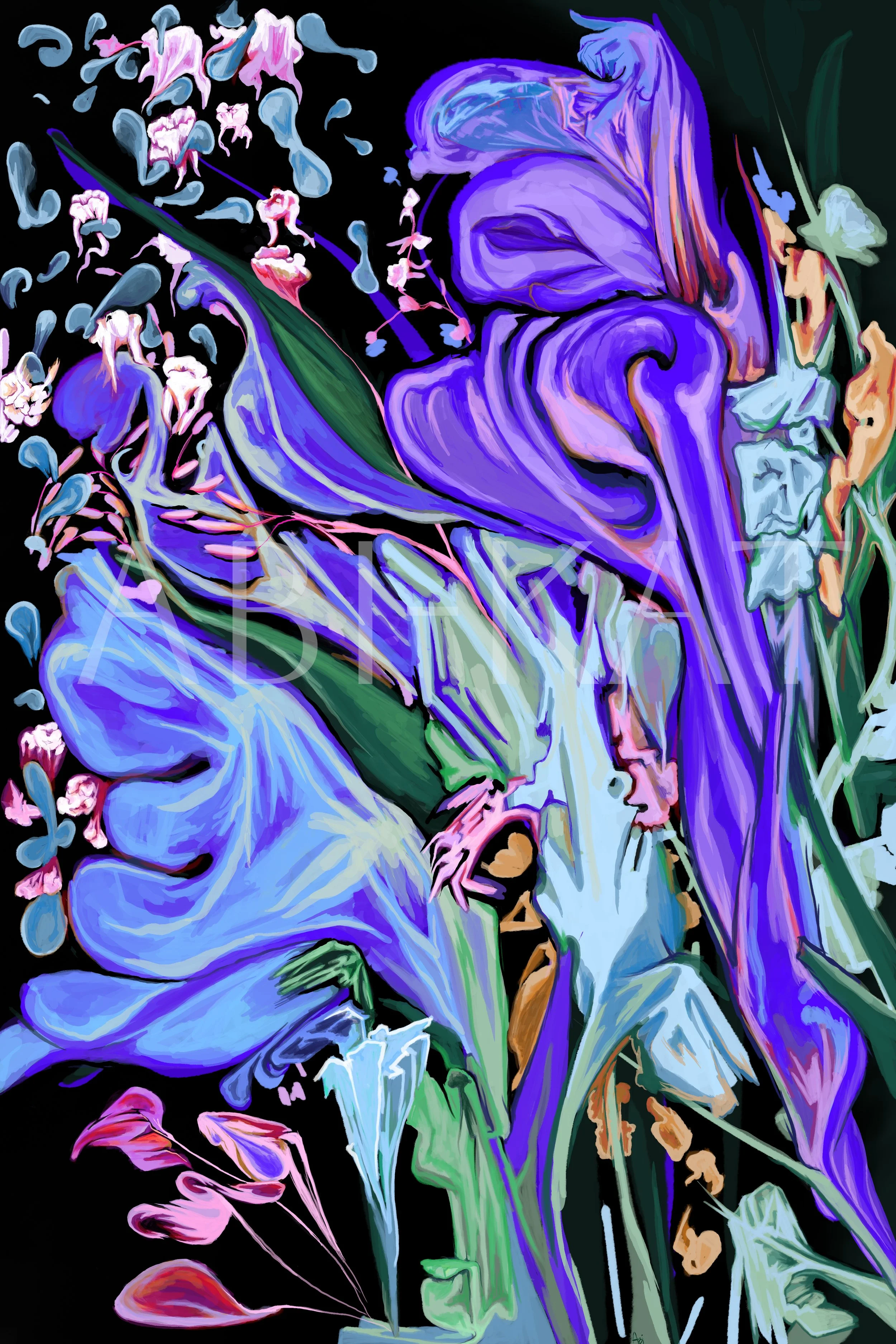
“Iris Goodbye”
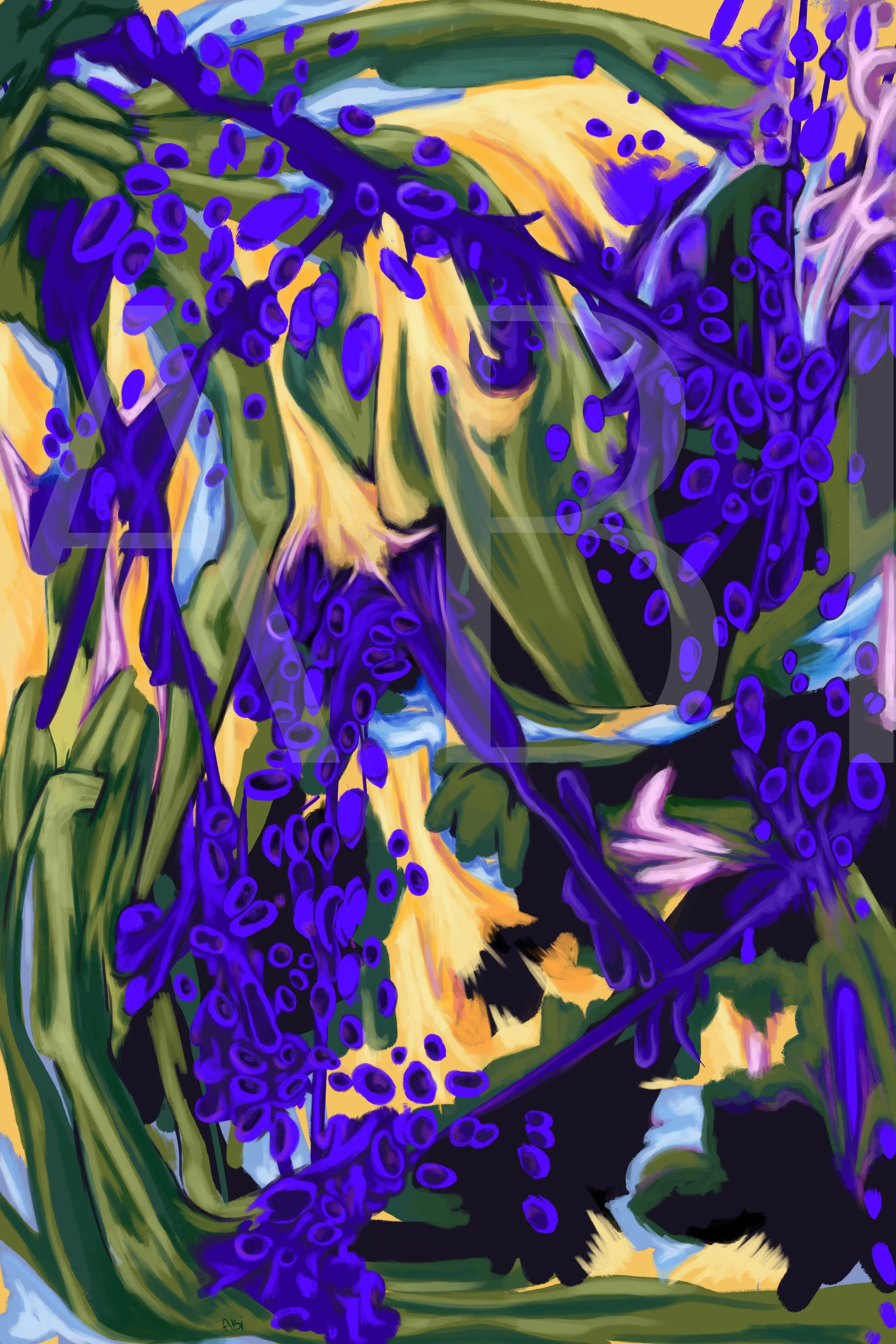
“Hyssop”
Birds
-
Birds are the second theme that emerged from the chaos of this emotional purging. I write about birds often—mostly about how much I envy them. These birds formed in a much gentler way.
“Heron” was a direct recollection of a blue heron I saw strangled in fishing line at the creek near my first home. And seeks to remind myself that terrible things happen from accidents and without intention.
The “blckbird” that is blue extends its wings to envelope long forgotten bones that erosion has turned into flowers. The “blckbird” comes to confuse those who are disrespectful of the bones.
In “joy” the viewers will find a pelican raising its wing to comfort something that has vanished or that only the bird can see. From behind the vines there is an enormous fish eye—waiting to settle the score.
“Aella” meaning “windstorm” has just made landfall not from her own wings but by being spit out of a chaotic tornado. She comes—bared to her bones with outstretched wings trying to steady herself while she carries a chest full of water as provisions. This drawing is a depiction of what life can sometimes feel like to me.
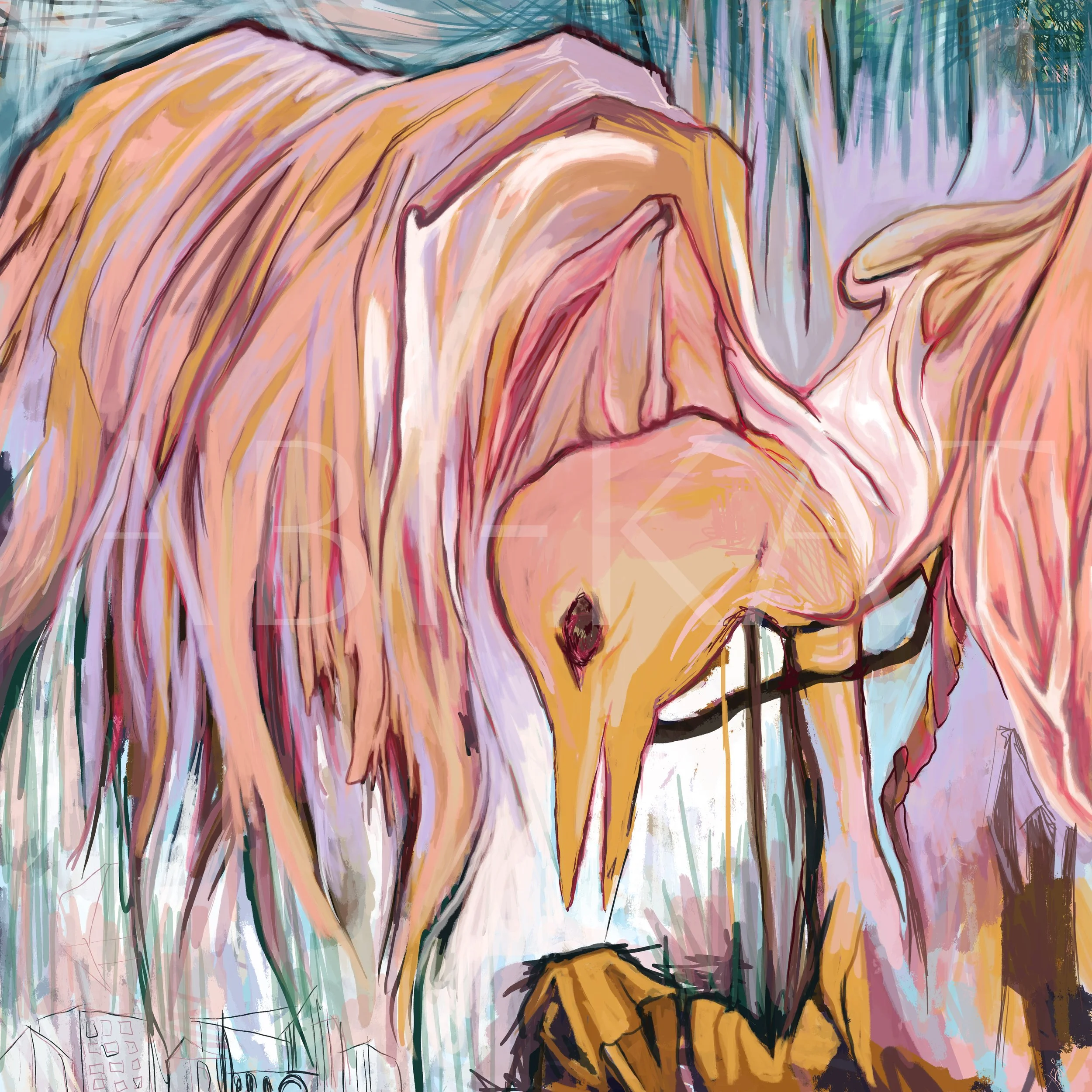
"Heron"
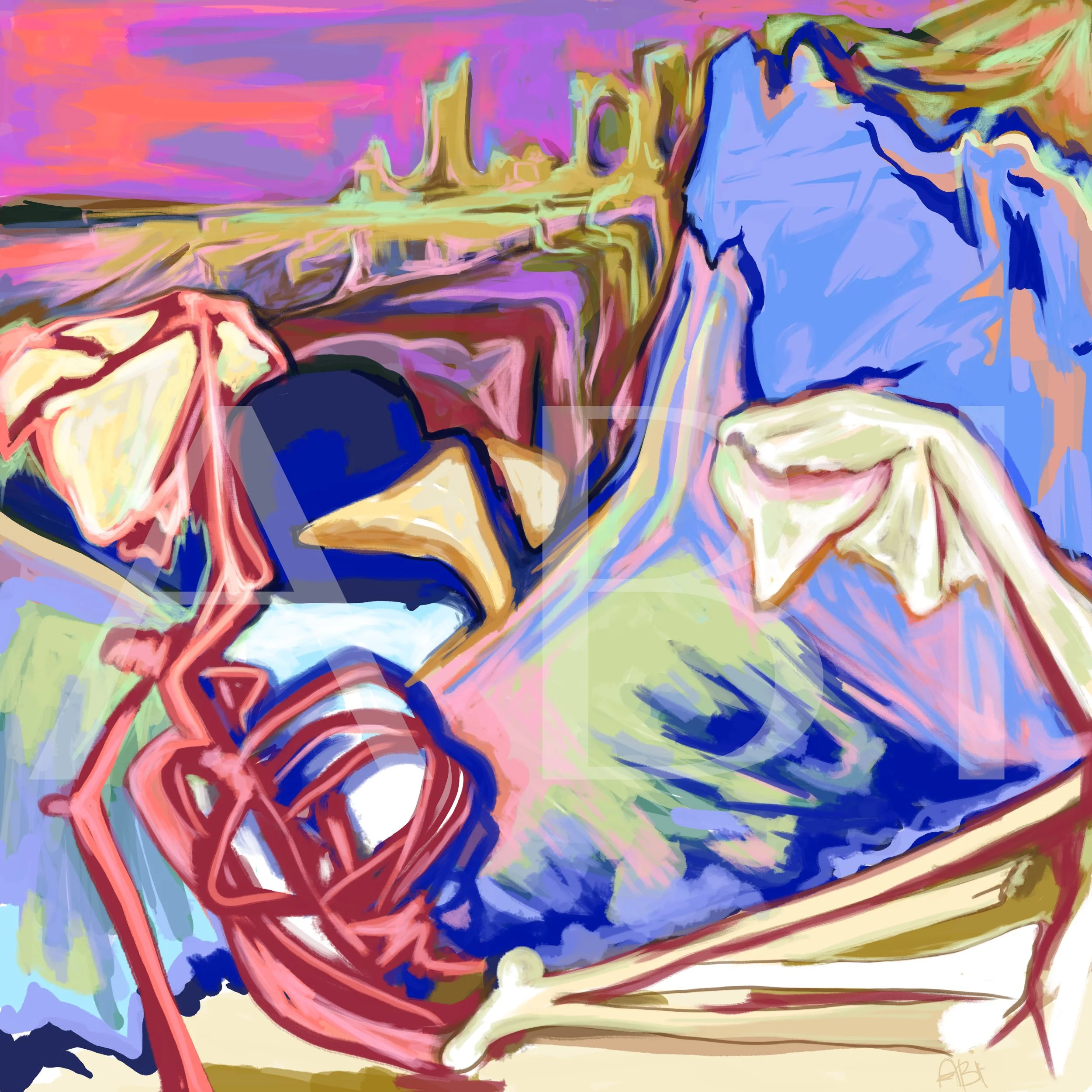
"blckbird"
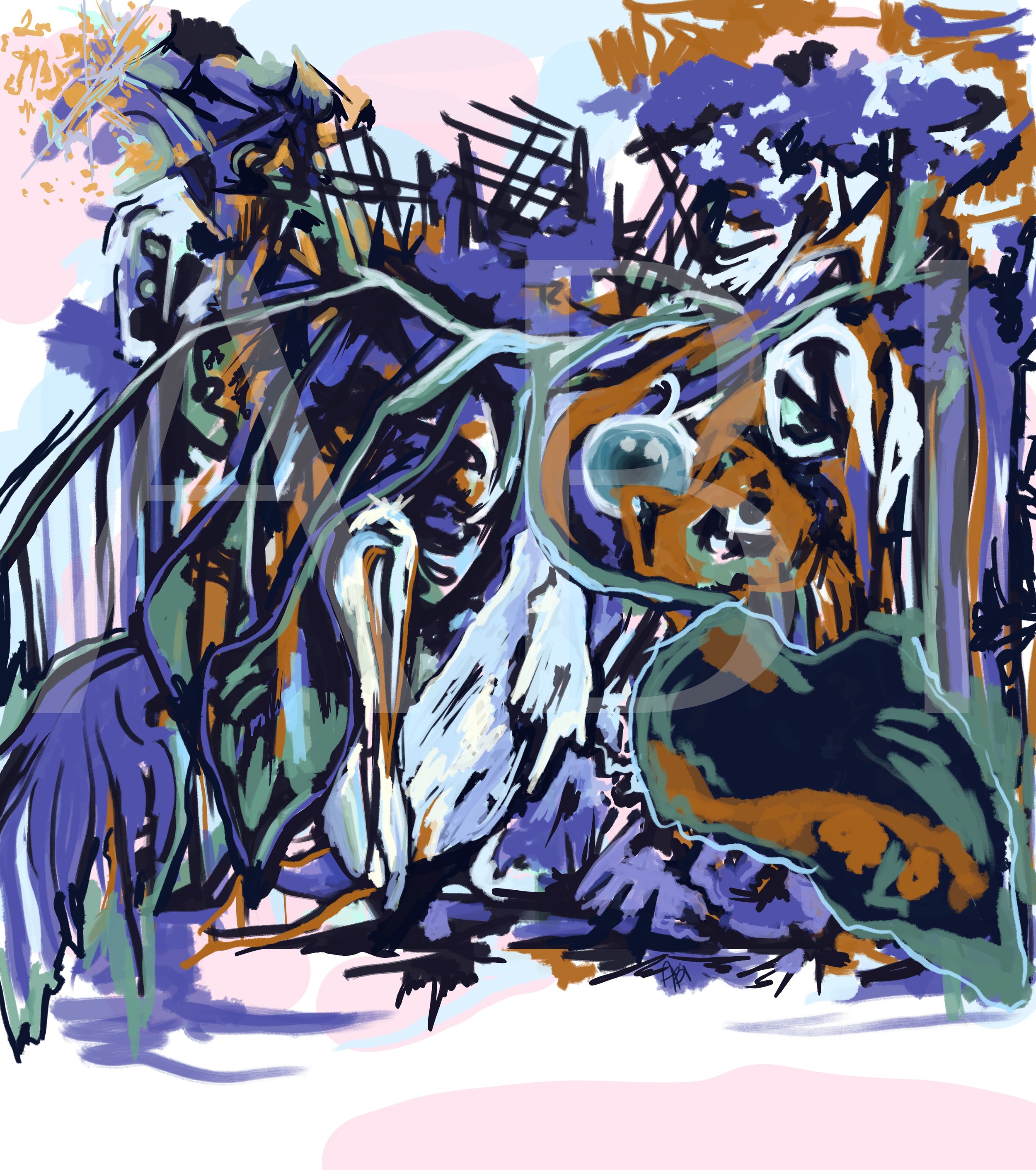
"joy"
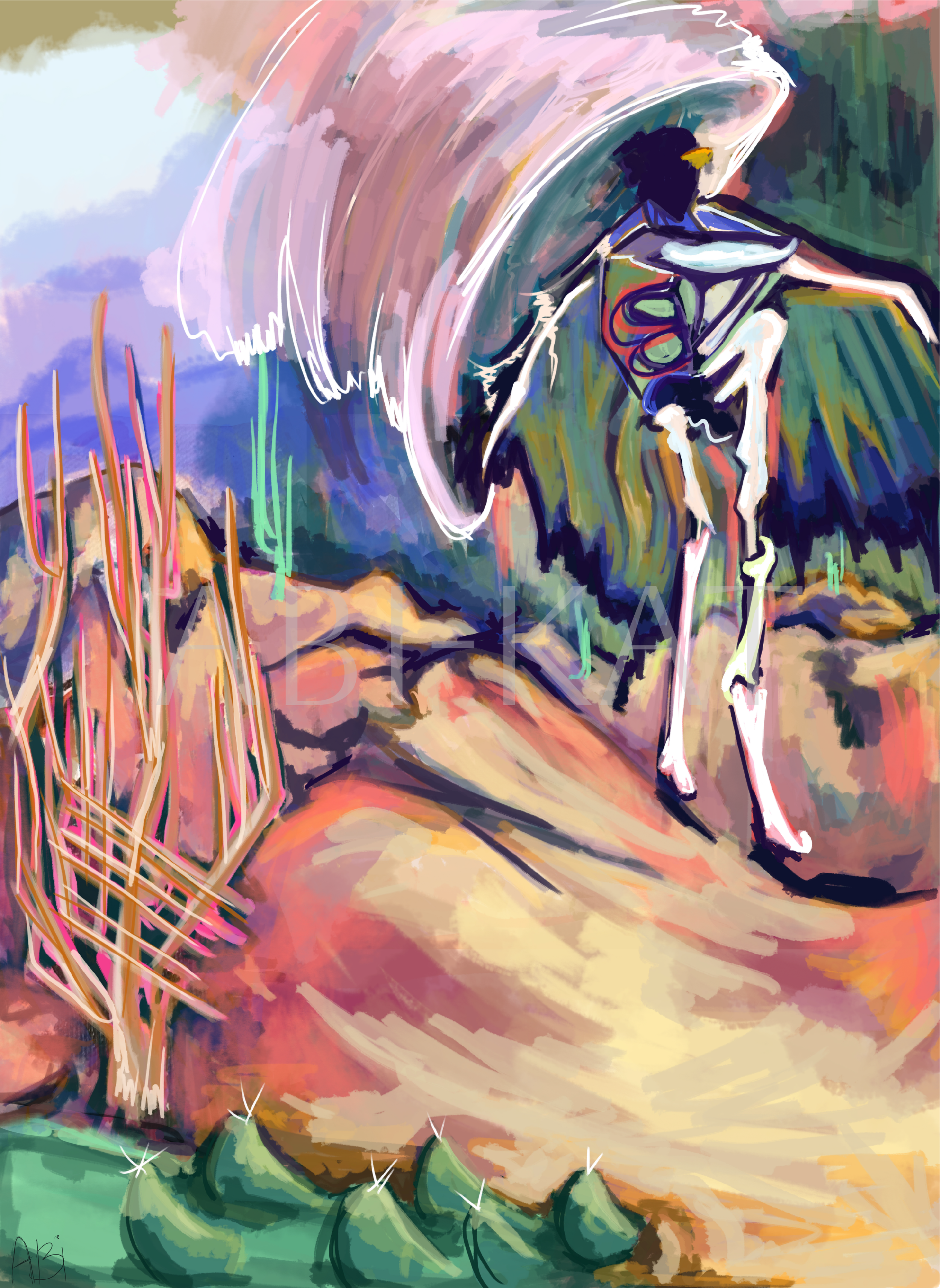
"Aella"
Terrain
-
This land is your land—this land is my land. “Hardening” was my first Terrain drawing of this series. All of these unraveled quite naturally, “Parliament” being my favorite. I did many of them as I processed my mother’s passing with dementia. She took her final breath as I showed her a picture of “Fragrant.” I had already named it and was pretty sure it was about her, but I told her it was how it felt to be hollowed out by grief. I held her hand and told her it was okay to pass. I always loved the way she smelled.
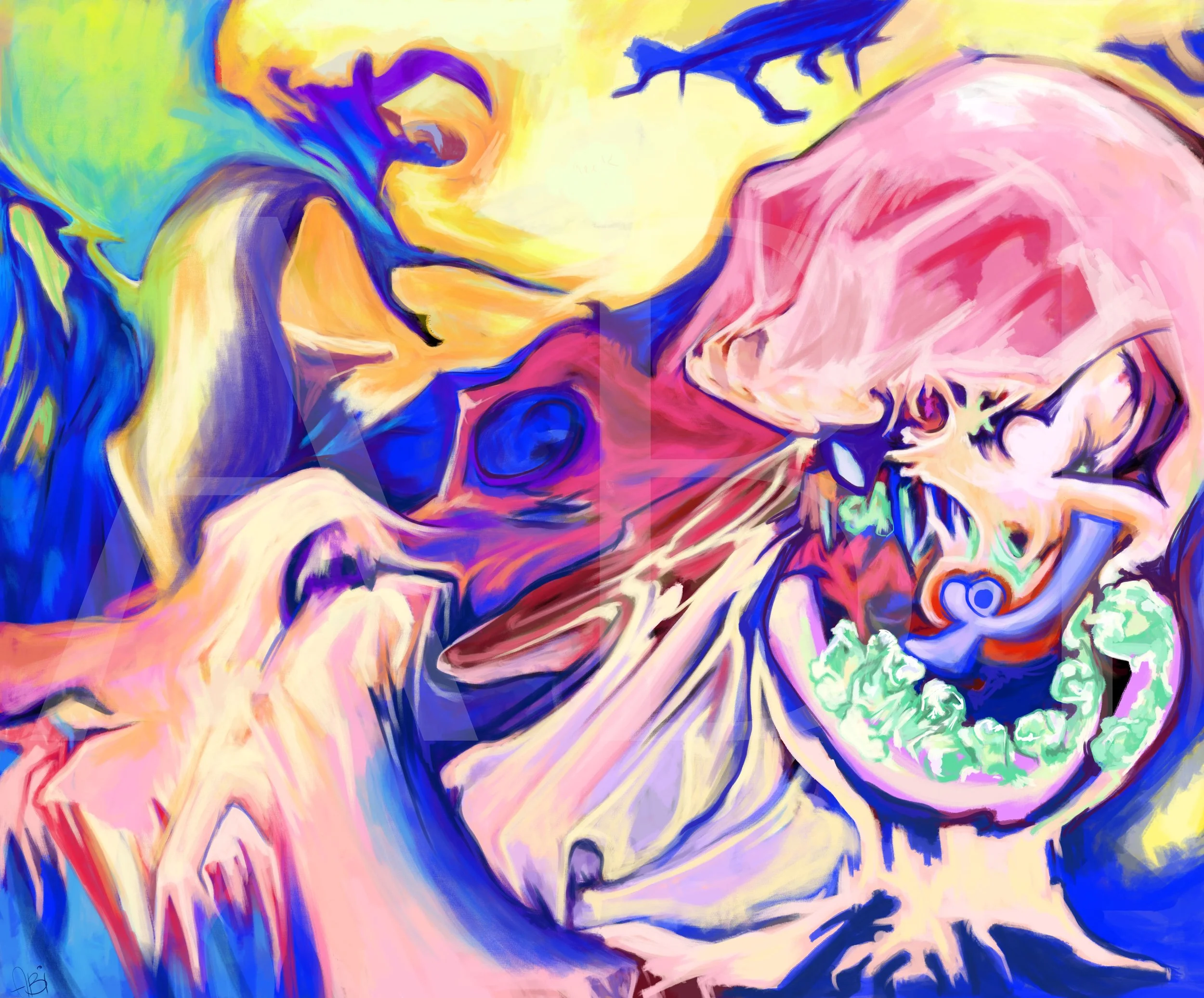
“Parliament”
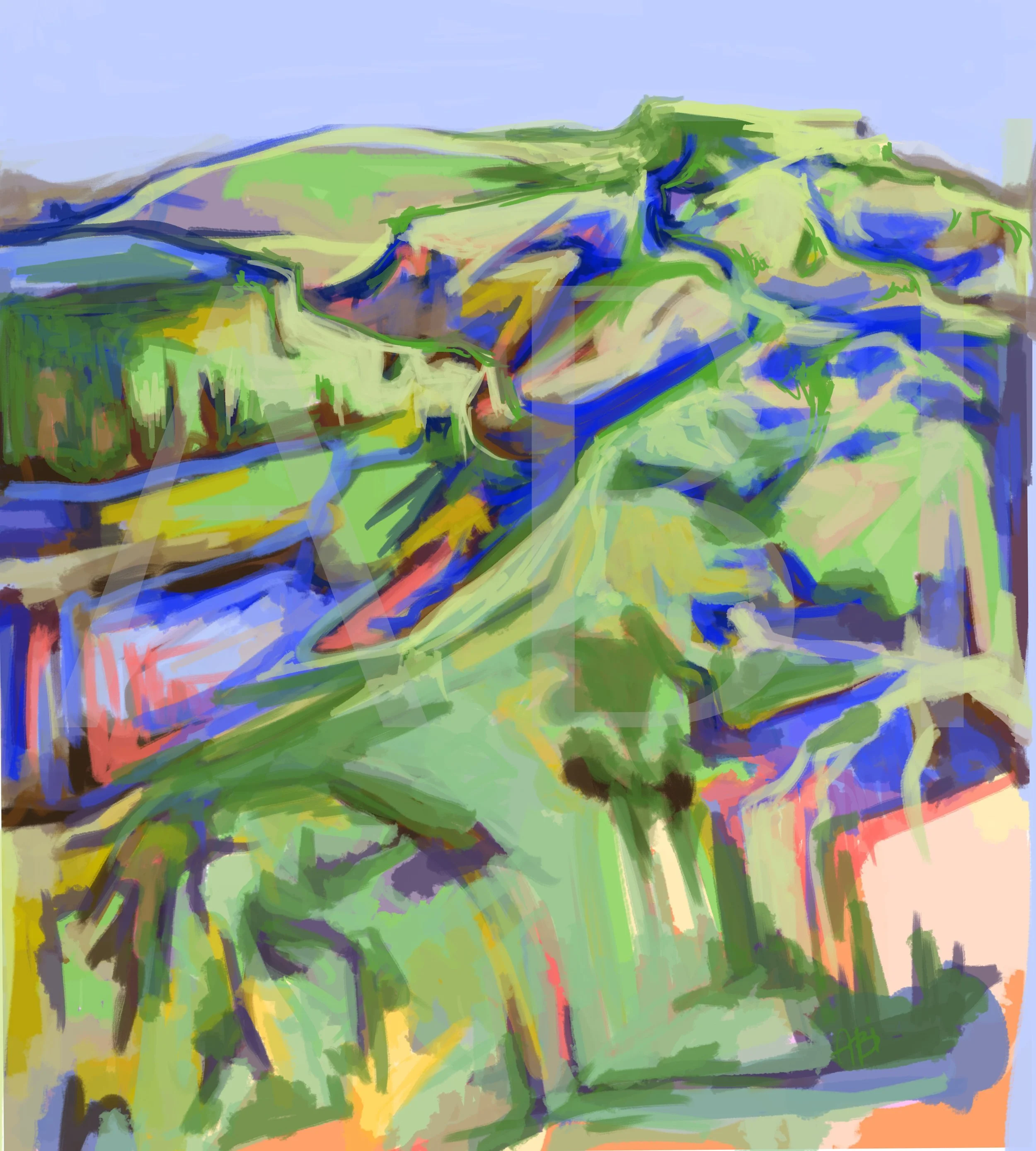
“Mara”
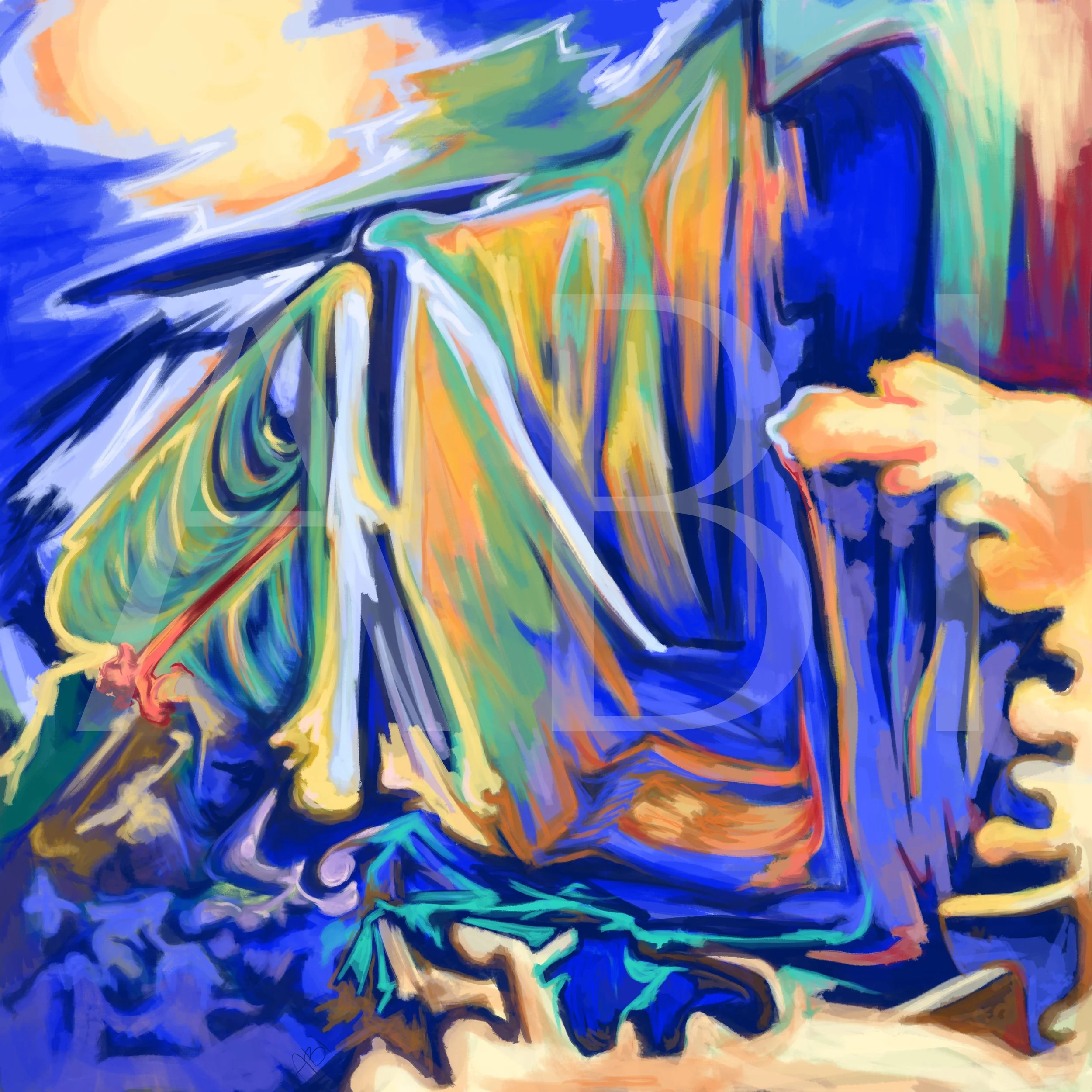
“Fragrant”
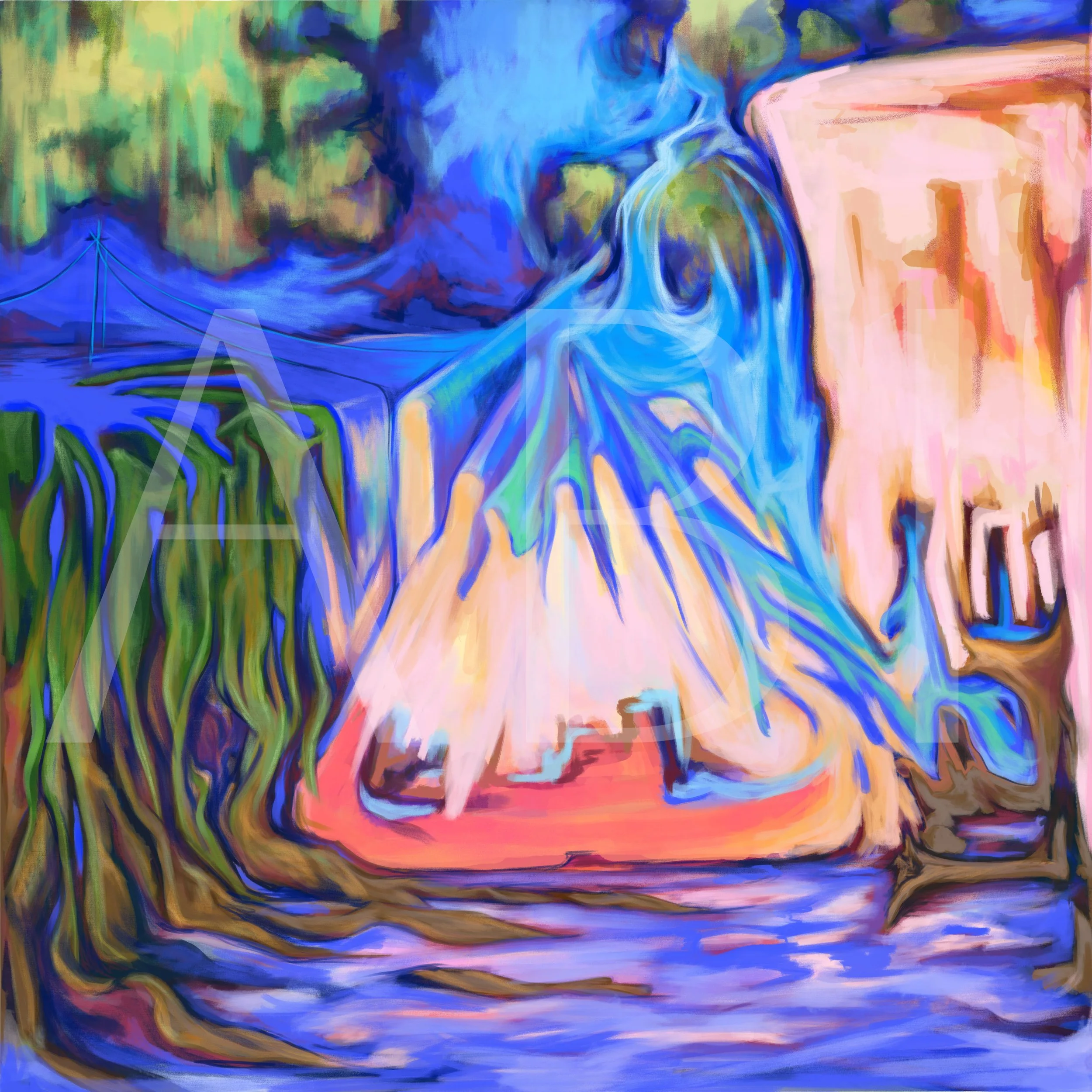
“a wake”
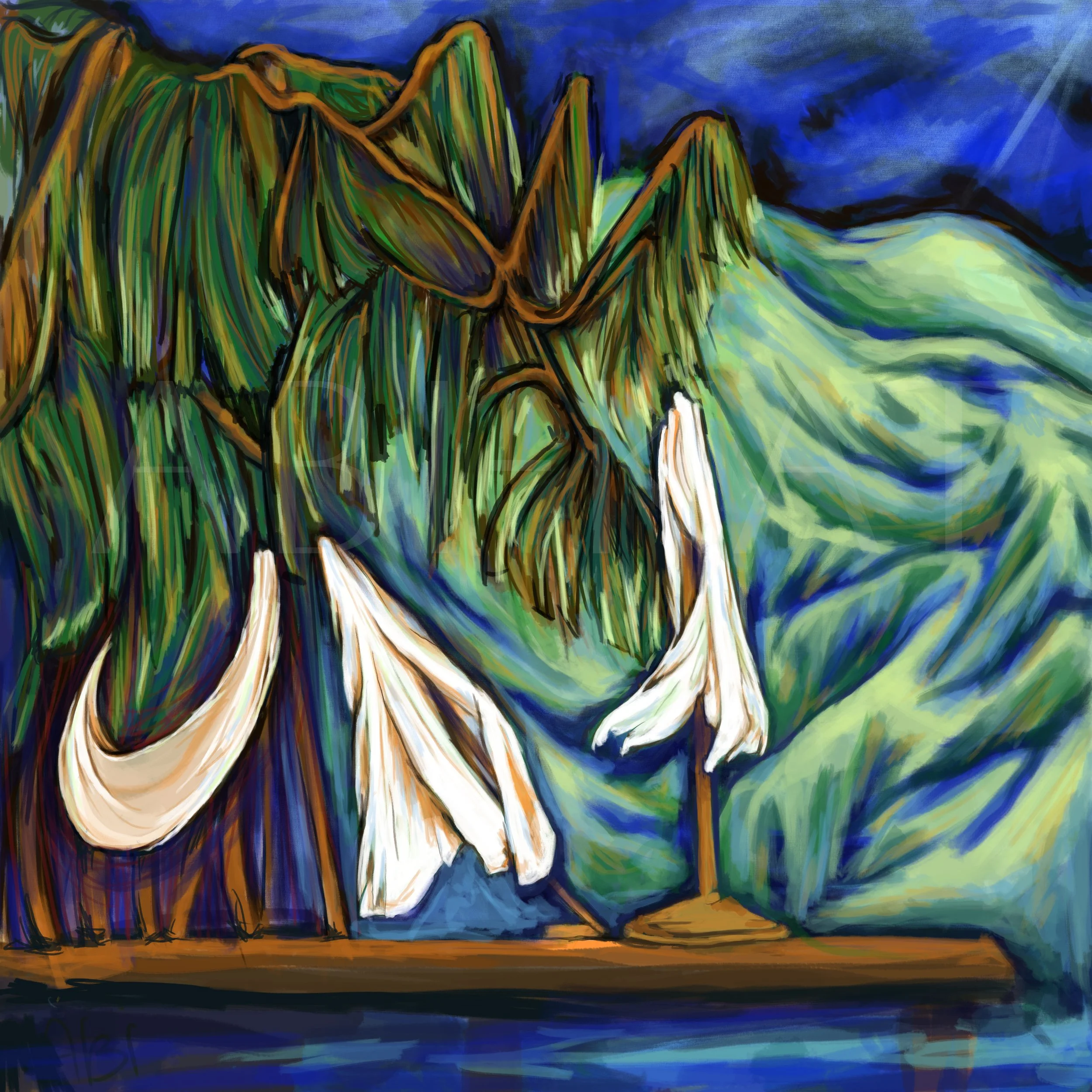
“Pine Shore”
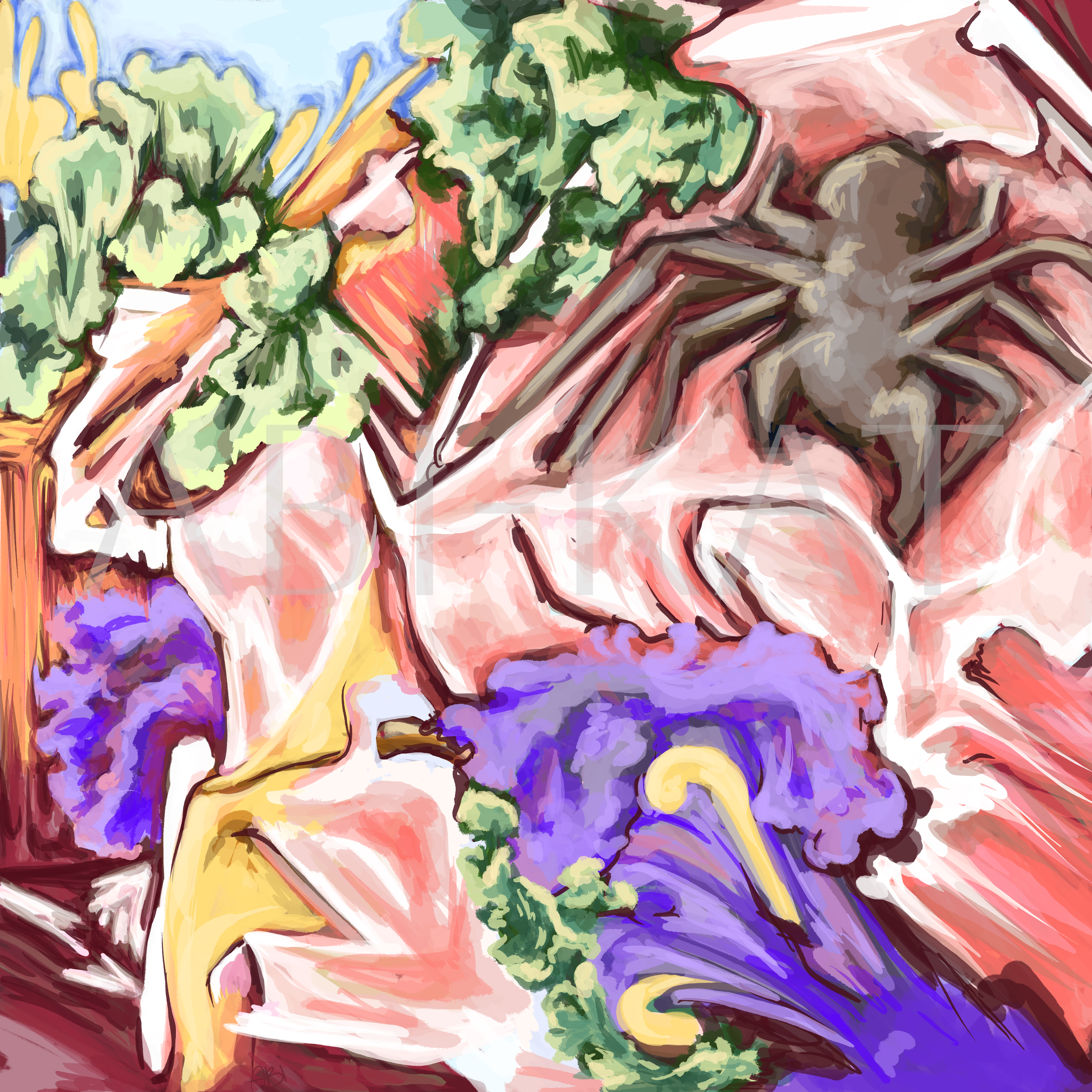
“Hardening”
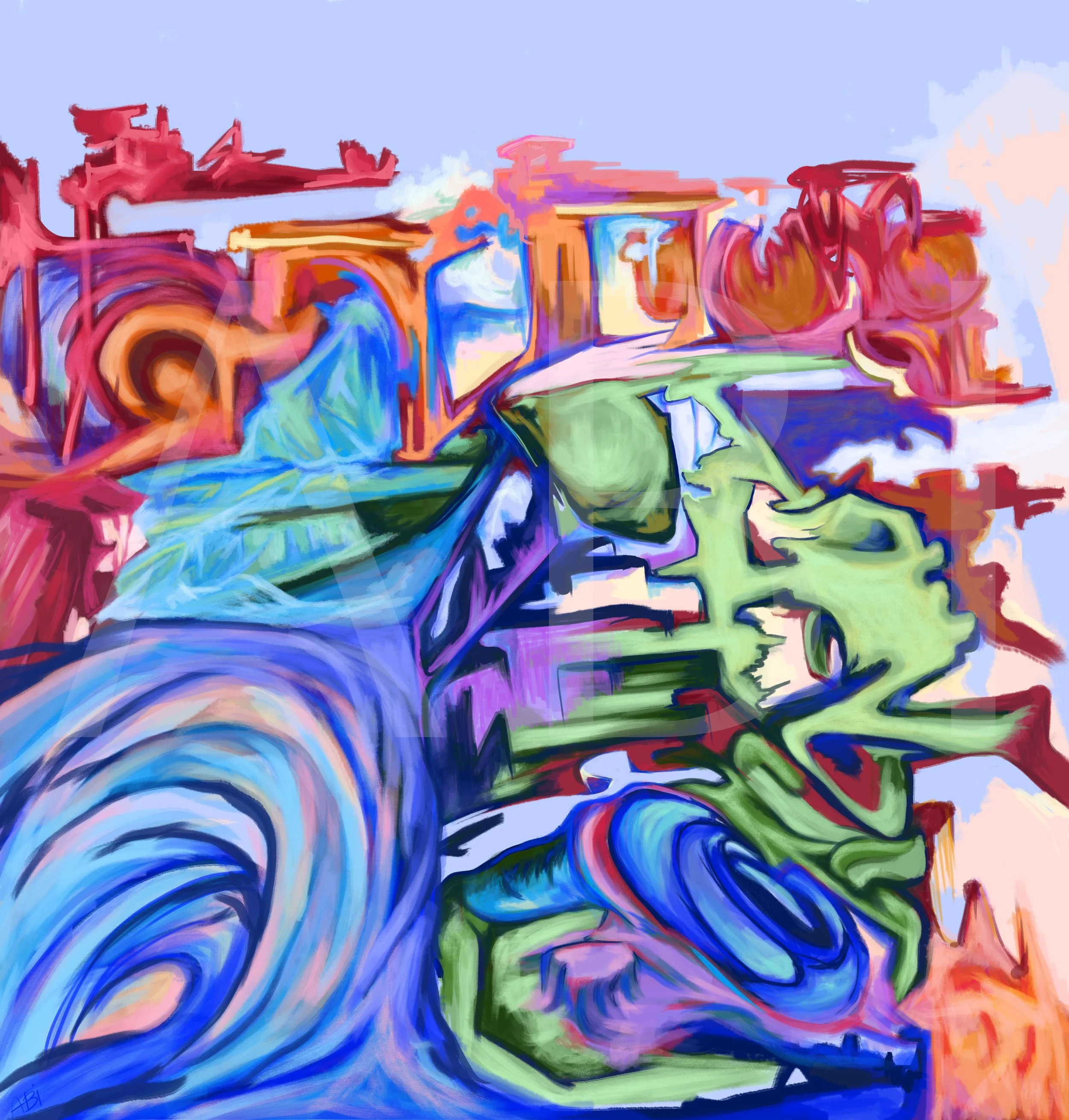
“Sky diner”
Structures
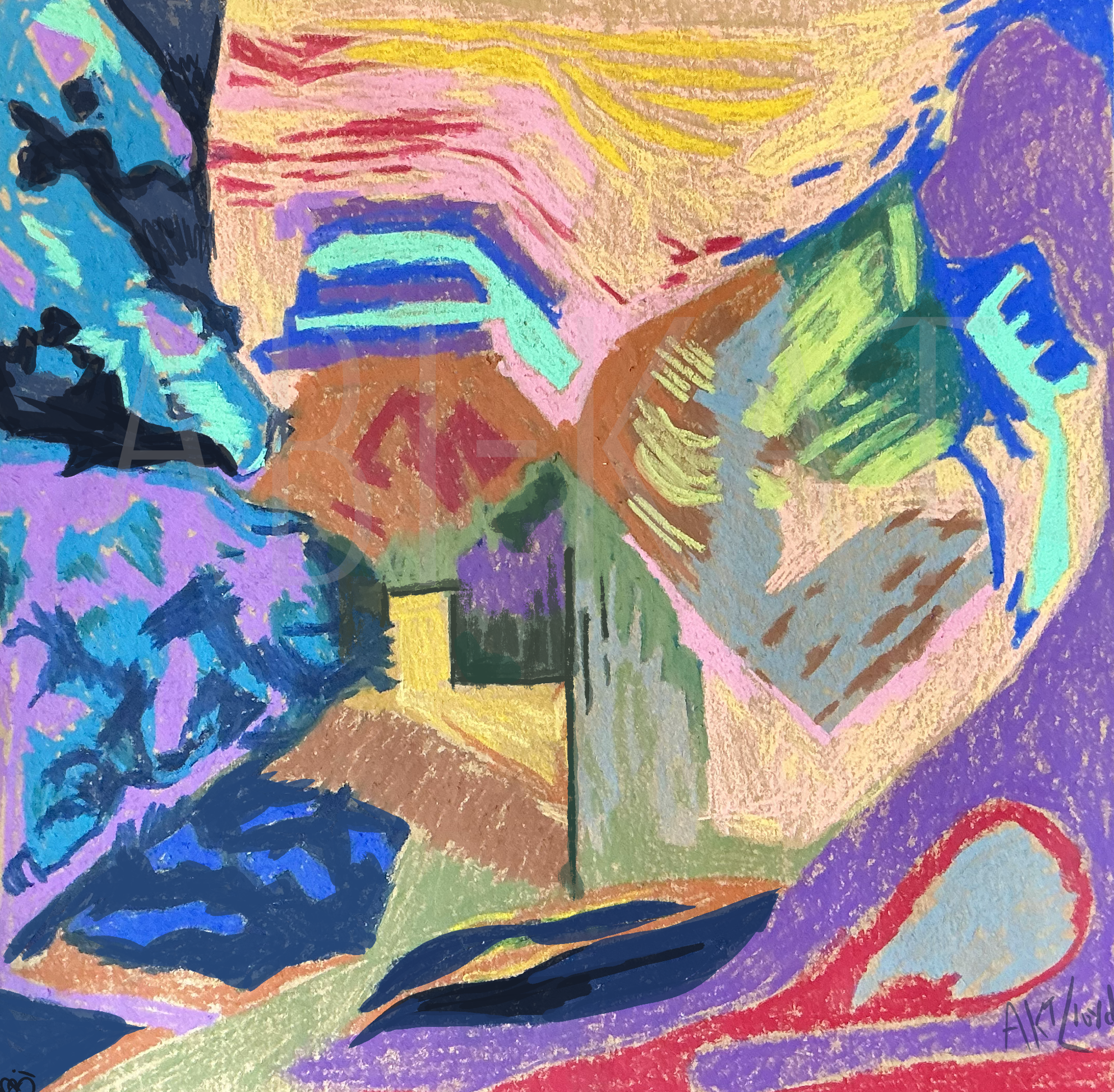
"Witness"
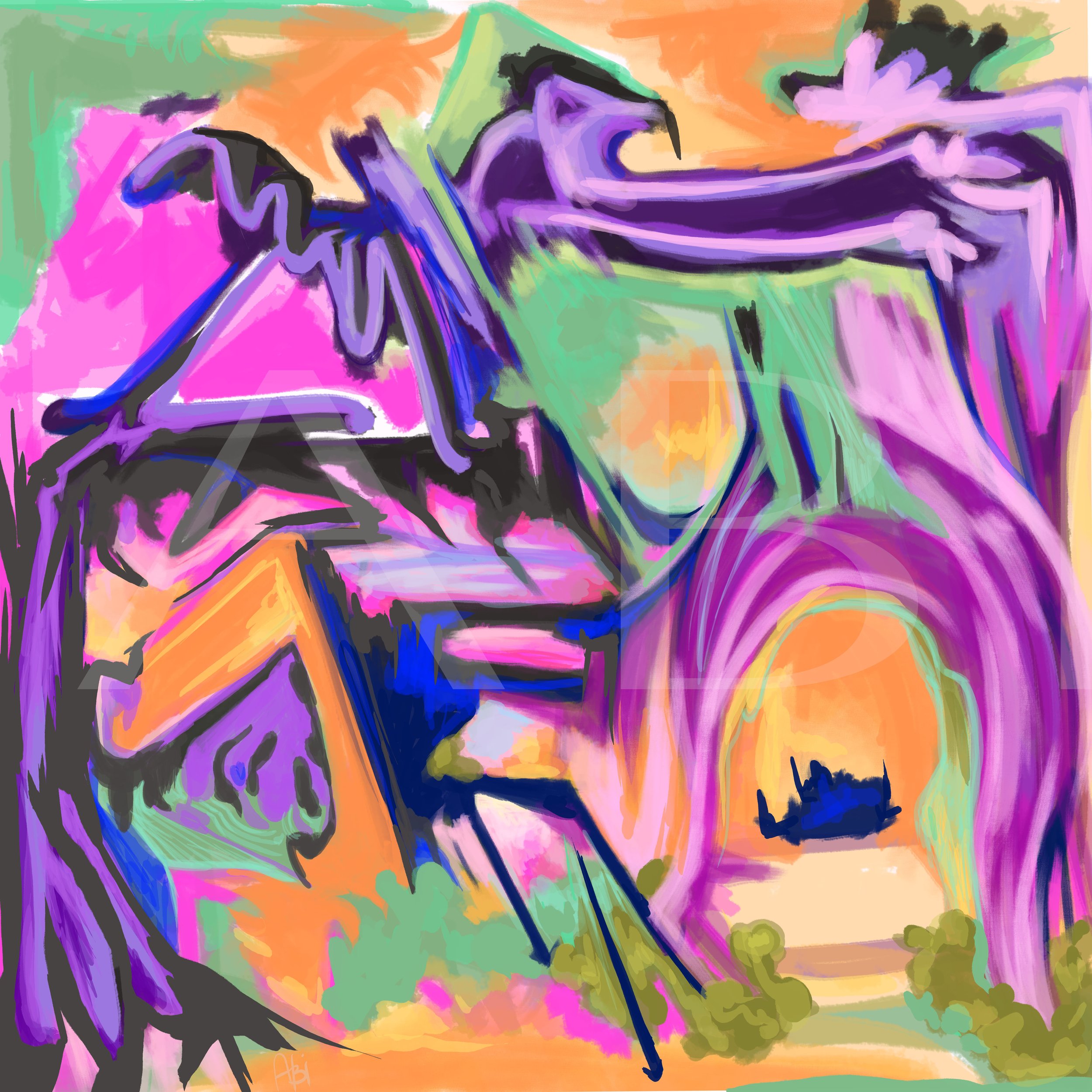
"Crow"
"brdge"
"Snow"